
Want to know what your cards are worth? Stakks is free.
Rookie cards are the engine of the hobby — a player’s first card is almost always their most collected and, for stars, their most valuable. But “rookie card” gets thrown around loosely, and a card showing a young player isn’t necessarily a rookie at all. Knowing how to identify a true rookie card protects you from overpaying and helps you spot a gem in a box of commons.
To identify a rookie card, look for an official “RC” logo (or a “Rated Rookie” / “Prospect” badge) on the front, then confirm the copyright year on the back matches the player’s first year in a fully licensed set. Since 2006, licensed cards use a standardized RC mark; for older cards, you verify a rookie by matching the year and set to the player’s debut. A card that merely pictures a young player is not a rookie card unless it’s properly designated and from their rookie year.
Here’s how to read the signals on the card, how to handle pre-2006 cards with no RC logo, and how to confirm the exact card fast.
What the RC logo actually means
Since 2006, the major licensed manufacturers adopted a standardized “RC” rookie logo that appears on a player’s official rookie-year cards. If you see that little RC shield on the front, you’re almost certainly holding a recognized rookie card. Some brands also use their own first-year badges — Donruss/Panini’s “Rated Rookie,” Bowman’s “Prospect” and “1st” designations — which signal a player’s early or first cards within those product lines.
A few nuances worth knowing. Bowman “Prospect” cards often come out before a player reaches the top level and aren’t always counted as the official RC by every collector, while the RC-logo card from their debut in a flagship set usually is. The takeaway: the RC logo is your strongest single signal on modern cards, but learn the brand-specific badges too, because they tell you where a card sits in a player’s earliest run.
Confirming the year and set (the part people skip)
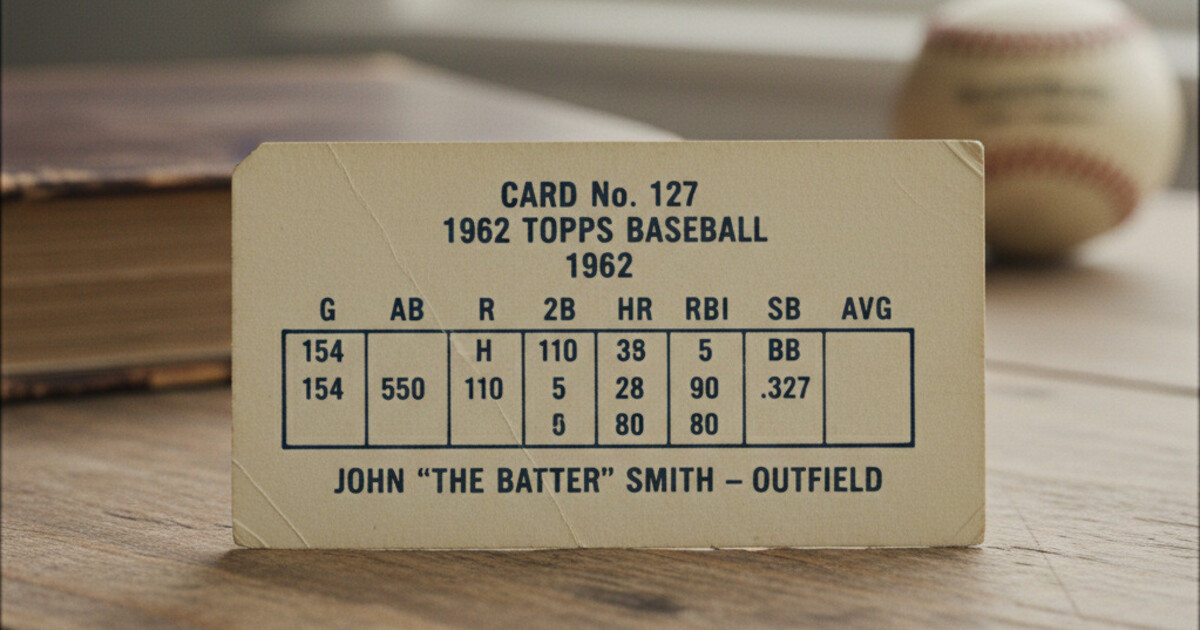
The logo isn’t the whole story — you also need the card’s year and set to confirm it’s genuinely a rookie and to identify it precisely. Flip the card over and find the copyright year, usually in small print near the legal text along an edge. A true rookie card’s year should line up with the player’s first year in a major licensed set. If the card year is well after the player’s debut, it’s a later card, not a rookie, even if the player still looks young.
While you’re on the back, note the brand and set name (Topps Chrome, Bowman, Panini Prizm, Donruss, Upper Deck, etc.) and the card number. Those two details pin down the exact card, which matters because a player’s rookie year usually spans several sets, each with its own rookie card — and each of those has parallels and inserts. Identifying the precise set and number is what separates “a rookie card” from “the card,” and it’s essential before you try to look up value.
Pre-2006 cards: no logo, so match the debut
Before 2006 there was no universal RC logo, which trips up beginners with vintage and ’80s–’90s cards. For these, you identify a rookie the old-fashioned way: determine the player’s first year in a nationally distributed, fully licensed set, and find the card from that year. Reference checklists and set guides list which card is considered the rookie for a given player.
Be careful of a few traps. Reprints and “rookie reprint” cards reproduce a famous rookie’s design but are not the real thing — look for “reprint” text or a different copyright year. Minor-league or pre-rookie cards can predate the recognized rookie but aren’t always counted as the official RC. And a card from a player’s second or third year, however clean, simply isn’t a rookie. When in doubt, match the card’s year and set against a trusted checklist for that player.
Why rookie status changes the value
Identifying a rookie correctly matters because it directly affects price. Rookie cards carry a premium over a player’s later cards, and for stars that premium is large. But — and this is the part beginners miss — a rookie card is only as valuable as the player, the scarcity, and the condition behind it. A common base rookie of a player who washed out can be worth almost nothing, while a numbered parallel or autographed rookie of a superstar in sharp condition can be worth a great deal.
So treat “it’s a rookie” as the first filter, not the final verdict. Once you’ve confirmed rookie status and the exact card, you still check condition (centering, corners, edges, surface) and compare against recent sold prices to land on a real value. A correctly identified rookie of the right player is where the hobby’s biggest hits come from — but identification has to come first.
How Stakks Helps You Identify Rookie Cards
Reading RC logos, decoding brand badges, and matching pre-2006 cards to debut years is a lot to learn — and that’s exactly the work Stakks automates. Point your phone at a card and Stakks identifies the player, year, set, brand, card number, and variation, and it surfaces the details that determine whether you’re holding a rookie and which exact version it is. Instead of squinting at copyright fine print, you get the card’s identity in seconds.
Once it’s identified, Stakks shows an estimated market value with a low–high range and trend, based on recent sales — so the moment you confirm a rookie, you also see whether it’s a valuable one or a common. You can save it into a collection and let Stakks track your total value as you work through a box hunting for rookies. It covers baseball, basketball, football, hockey, and soccer.
One honest caveat: Stakks identifies and values cards, and notes condition, but it isn’t a grading service and doesn’t assign PSA/BGS grades, and its values are market estimates from recent sales rather than guaranteed prices. For quickly separating real rookies worth a second look from the pile of commons, it does the heavy lifting — free to start.
Frequently Asked Questions
What does RC mean on a sports card?
RC stands for “Rookie Card.” Since 2006, licensed sports cards carry a standardized RC logo to mark a player’s official rookie-year cards. Before 2006, there was no universal logo, so you confirm a rookie by matching the card’s year and set to the player’s debut. A card with the RC mark is the recognized rookie for that player.
How do I know if a card is a true rookie card?
A true rookie card is from the player’s first year in a fully licensed, widely released set, and modern ones carry an “RC” logo. Check the copyright year on the back against the player’s debut, look for the RC or “Rated Rookie” badge, and make sure it isn’t a reprint, a minor-league-only card, or a later card just picturing a young player.
Are all rookie cards valuable?
No. A rookie card is only as valuable as the player, the card’s scarcity, and its condition. A star or Hall-of-Famer’s rookie in clean shape — especially a numbered parallel or autograph — can be very valuable, while a common rookie of a player who didn’t pan out may be worth very little.
Can a player have more than one rookie card?
Yes. In a given rookie year a player often appears in several different sets and brands, each producing its own rookie card, plus parallels and inserts of each. Collectors usually consider all of them rookie cards, though some flagship sets are more sought-after and valuable than others. Ken Griffey Jr is the classic example: six different 1989 rookies, and the Ken Griffey Jr rookie card value gap between the Upper Deck and the rest is roughly 100x — and the Michael Jordan rookie card story shows how the hobby decides which set counts as “the” rookie.
Found a card you think might be a rookie? Scan it with Stakks free to confirm the player, year, and set — and see what it’s worth — in seconds.