
Want to know what your cards are worth? Stakks is free.
You found a card in an old binder and want to know when it was printed. Maybe it’s a player you recognize but can’t place the set, or you inherited a collection with no records attached. Learning how to tell the year a sports card was made matters: it determines whether the card is a true rookie, where it fits in the production timeline, and how to pull up the right entry in a price database.
To tell the year a sports card was made, flip it over and check the copyright line near the bottom. Most modern cards from the 1980s onward show the manufacturer’s year: ”© 1991 Topps” or ”© 2003 Panini.” Vintage cards often skip the date, but you can identify the year from the set name, design, and online card databases.
Where to Find the Year on a Sports Card
The back of the card is the starting point. Most modern sets print a copyright notice along the bottom edge, formatted as ”© [Year] [Manufacturer].” On older Topps and Fleer cards, it sometimes sits in fine print along a side border.
If you spot the year right away, you’re done for modern cards. The copyright line on sets from the 1990s onward is almost always present and accurate.
For vintage cards, it’s less reliable. Pre-1960 cards from Topps and Bowman sometimes omit the line entirely. Cards from the early 1960s through 1970s are more consistent but still variable by manufacturer. If there’s no date, the section below covers how to track it down.
Sports card manufacturers standardized copyright dating in the late 1950s and early 1960s, with Topps, Fleer, and Donruss among the first to apply it consistently. For baseball specifically, the production cycle works like this: the MLB season ends in October, companies photograph players and compile rosters through November, production wraps in December, and boxes ship to stores in February or March. That cycle means a Topps Flagship baseball card’s copyright year is always one year ahead of the stats on the back. A 1987 Topps card shows 1986 batting averages. A 1989 Fleer card shows 1988 ERA leaders. Basketball and hockey sets handle this with dual-year notation (1990-91, 1993-94) because their seasons bridge two calendar years. Football rookies are produced the same calendar year they’re drafted, so the copyright year and season year match for NFL sets.
Why the Year on a Baseball Card Doesn’t Match the Stats
Baseball card dating trips up a lot of collectors because the copyright year and the season covered are always one year apart.
Pick up a 1988 Topps card. The copyright reads ”© 1988 Topps,” but flip to the stats column and the most recent full season shown is 1987. The card was physically produced in 1988, covers the 1987 season’s data, and will always be called a “1988 Topps” in every database and price guide. That naming convention has held since Topps began printing consistently in the early 1950s.
Basketball handles this differently. A card from the 1990-91 NBA season appears as “1990-91 Upper Deck” or “1990-91 Fleer” in databases, with a physical production date that aligns with the fall of 1990.
For any card where the year matters for value or identification, use the copyright year as the card’s set identifier, not the stat year. Our full guide on how to read a sports card walks through every field on the back: card number, set name, brand, and variation markers, so you can match any card to the right database entry.
How to Tell the Year a Sports Card Was Made Without a Copyright Date
Vintage cards, some budget sets from the 1970s, and certain foreign issues skip the copyright line entirely. Here’s how to date them.
Start with the design. Card design changed dramatically by decade. Bowman and Topps sets from 1951-1955 used painted illustrations instead of photographs. Color photography became standard by the late 1950s. Foil stamping appeared in the late 1980s. Refractor technology debuted in 1993 with Topps Finest. If a card has holographic foil, it was printed no earlier than the late 1980s. If it shows a painted portrait, it’s almost certainly pre-1956.
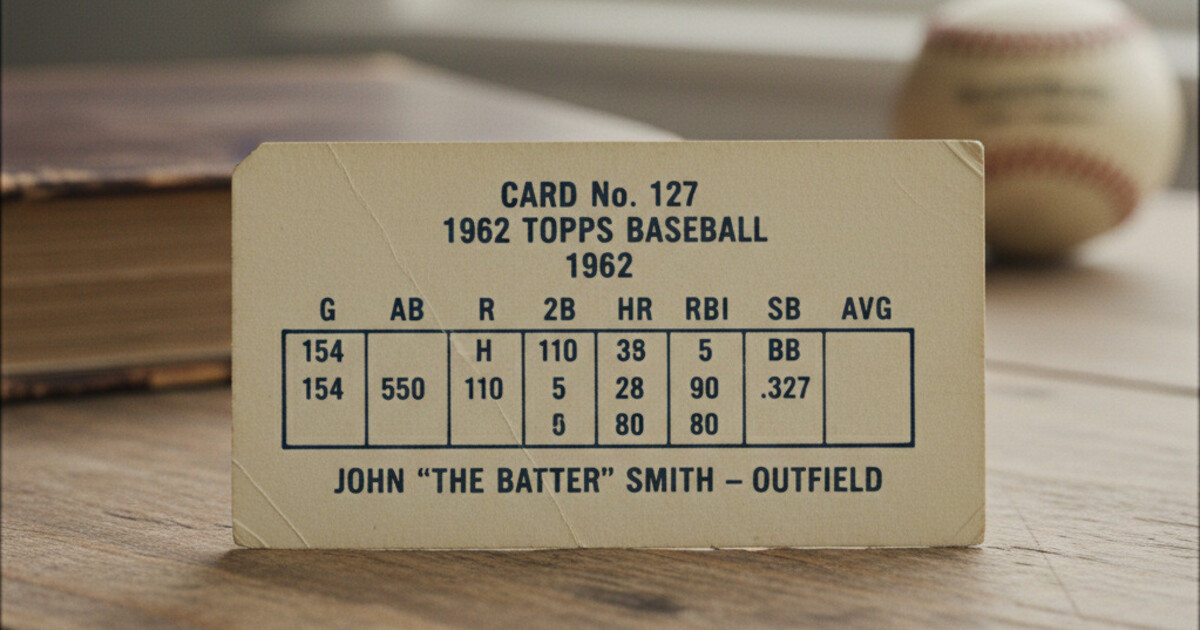
Check the card number. The number on the back ties directly to a specific set. Search it alongside the player name on Trading Card DB (tcdb.com) or Beckett’s free search. Most sets are fully catalogued down to individual card numbers, including error cards and variations.
Look at the stats columns. The most recent full-season stats tell you the earliest the card could exist. A card showing stats through 1978 was printed no earlier than late 1978 or early 1979.
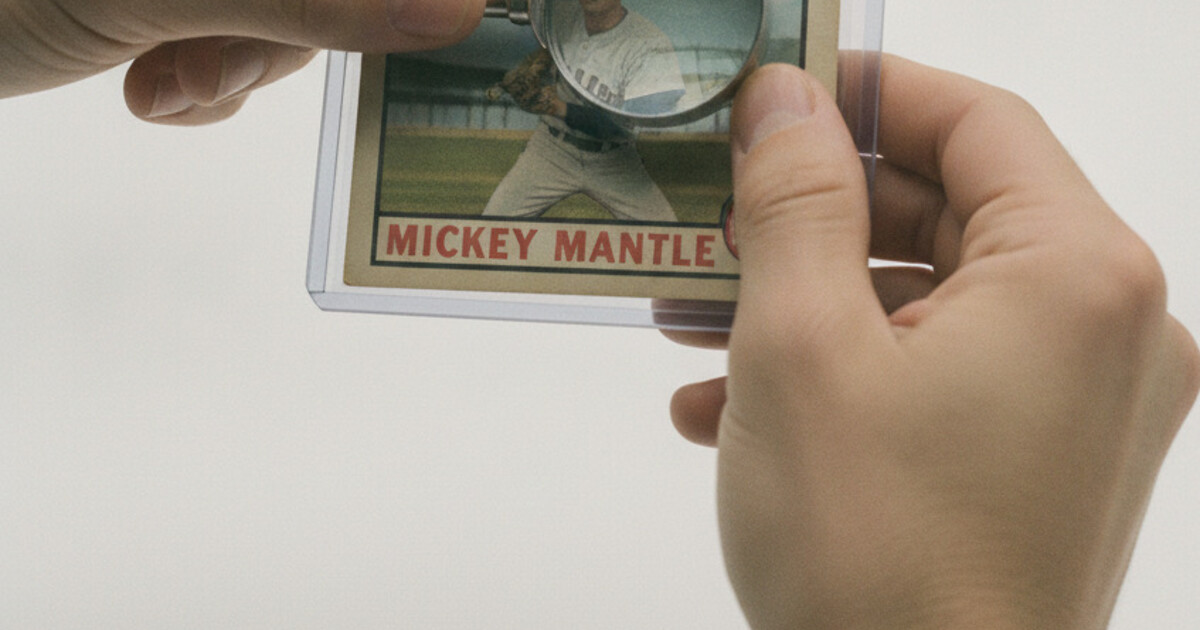
Physical stock and printing method. Cards from the 1950s and 1960s used thicker, coarser cardboard with visible screen-printing dots under a loupe. Cards from the 1980s got thinner and glossier. Early 1990s sets introduced UV coating and brighter ink colors. These are rough guides, not precise dating tools, but combined with design clues they narrow the window fast.
Once you have a probable year and set, confirm it in a database. If you want to skip the manual research on any modern card, Stakks auto-identifies the year, set, brand, and variation when you scan it.
What the Year Means for a Card’s Value
The year a card was produced shapes its price in 3 concrete ways.
Rookie year cards carry the biggest premium. A card from a player’s official licensed rookie season is the original production run. That supply never grows. If the player becomes a star, demand for their rookie year cards climbs for years while the number of copies stays fixed. Our guide on how to identify a rookie card explains the RC designation and which sets carry it.
Junk wax era cards (roughly 1987-1993) are typically low-value. Manufacturers massively overproduced during this window, printing hundreds of millions of cards per set. Most are worth a few cents regardless of condition. A 1989 Ken Griffey Jr. Topps rookie is a genuine rookie card, but millions of copies exist. Even in near-mint shape it typically sells for $50-$150, held back not by quality but by supply.
Pre-1980 cards can be genuinely scarce. Production runs from the 1950s through 1970s were modest, and 40-70 years of use and storage have thinned the surviving supply considerably. Year of production is one of the core factors in how to tell if a sports card is valuable, alongside condition, player, and variation.
Frequently Asked Questions
Does the year on the front of a sports card match the year it was made?
Usually, yes. For baseball cards specifically, the copyright year runs one ahead of the stats shown: a 1991 Topps shows 1990 stats, but the physical card was still produced in 1991. Basketball and hockey cards use dual-year labels like 1990-91 to reflect the season they cover.
What if my vintage card has no year on it?
Identify the set by its design and card number, then search an online database like Trading Card DB or Beckett. Pre-1960 Topps and Bowman cards rely on design cues that collectors and databases have well-documented. A painted illustration almost certainly places the card before 1956.
Why does the copyright year on baseball cards run one year ahead of the stats?
Baseball cards are printed in the off-season after one season ends. Companies compile stats and run production from October through January, then ship to stores in February or March. The copyright year belongs to the printing cycle, not the season covered by the stats on the back.
Does the year a card was made affect its value?
Yes. Cards from a player’s rookie year carry permanent premiums because they’re the original production. Vintage cards from before 1980 are scarcer due to smaller print runs and decades of loss. Cards from 1987-1993 (the junk wax era) were overproduced and are generally low-value regardless of condition.
The year a card was made determines rookie status, production rarity, and how to look it up correctly. Most modern cards put the answer right on the back. For vintage pieces without a copyright date, the design, card number, and stat columns get you there. If you want to skip the research entirely, download Stakks and scan the card. The app identifies the year, set, brand, and current market value in seconds. Free at stakks.app.