
Want to know what your cards are worth? Stakks is free.
You picked up a card and you’re staring at it. Player name, a bunch of numbers on the back, a brand logo in the corner, and maybe some tiny text you can’t quite make out. If you’re new to the hobby, or rediscovering cards from a box in the attic, knowing how to read a sports card is the starting point for everything: figuring out what you have, whether it’s rare, and what it might be worth.
This guide covers every piece of information printed on a sports card and what each one means.
Reading a sports card comes down to 4 pieces of information: the year it was produced, the set name (like Topps Series 1 or Panini Prizm), the card number on the back, and any special designation like an insert, parallel, or serial number. Those details determine the card’s identity and affect its market value.
How to Find the Year on a Sports Card
The year tells you when the card was made. For most modern cards (1990s to present), it appears on the front or back in small text near the brand logo or in the copyright line at the bottom edge. You’ll see something like ”© 2023” or a year printed alongside the set name.
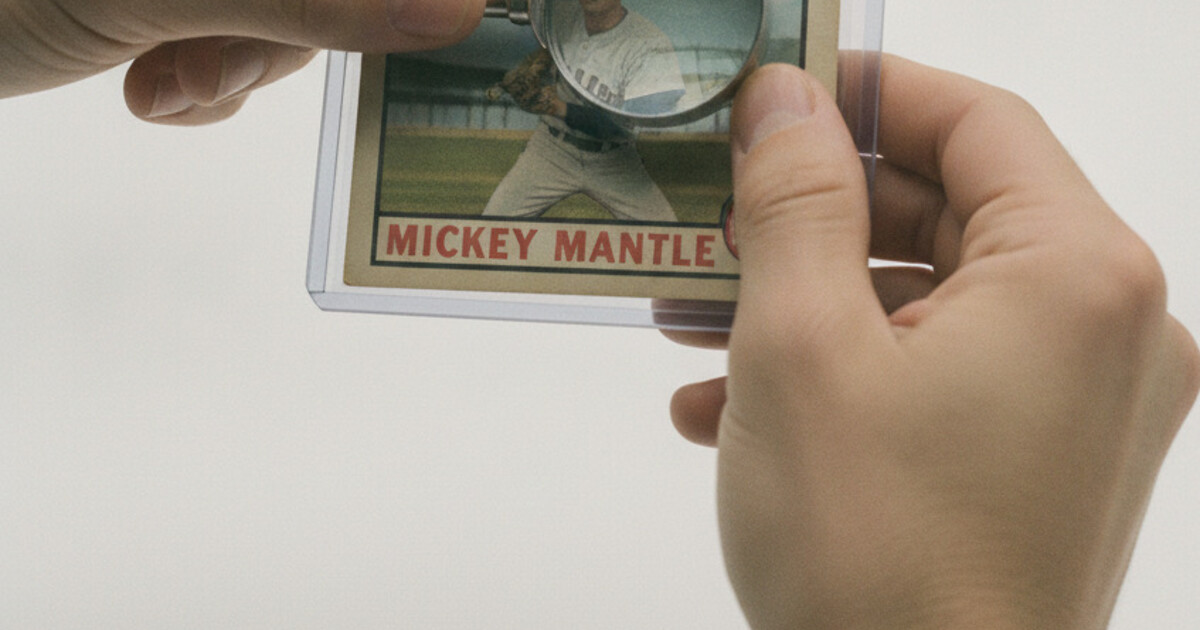
For vintage cards (pre-1980), the year often isn’t printed anywhere on the card. You have to identify the set first, then cross-reference it to find the production year. A 1952 Topps Mickey Mantle doesn’t say “1952” on it. Collectors have catalogued which sets came out when, so you can narrow it down by the card’s design details.
The production year matters more than most beginners expect. Card manufacturers occasionally reprint popular designs decades apart, so two cards can look nearly identical while having very different ages and values. The year also determines which players qualify as true rookies. A player’s first officially licensed card, produced in the year they entered the league, carries the RC designation and typically trades at a significant premium over later cards of the same player. In baseball, the most valuable vintage cards come from the 1950s and early 1960s, when print runs were small and survival rates are low. In basketball, high-value modern rookies tend to come from the 2010s onward, with Panini dominating the license from 2010 through 2023. Knowing the year helps you place a card in its collecting context: whether it’s from a scarce vintage run, a high-volume era from the 1980s and 1990s, or a modern limited-print premium set worth tracking carefully.
The Set Name and Card Brand
The set name tells you which collection the card belongs to. Every year, manufacturers release dozens of different sets across multiple sports. In baseball, common ones include Topps Series 1, Topps Chrome, Bowman, and Topps Heritage. In basketball, you’ll see Panini Prizm, Donruss, and Select. Hockey has O-Pee-Chee and Upper Deck.
The brand name (Topps, Panini, Bowman, Upper Deck) is usually the most prominent logo on the card. The set name is more specific. Topps Series 1 and Topps Chrome are both Topps products, but they’re different sets with different print runs, different materials, and different values in the secondary market.
Why does this distinction matter? A rookie card in Topps Chrome sells for considerably more than the same player’s base Topps Series 1 card from the same year. Chrome is printed on a reflective stock in smaller quantities, and collectors prize it over the standard paper version. The set shapes the card’s rarity, material quality, and how much demand it carries from buyers.
Some sets are annual releases that repeat every year (Topps Series 1 in baseball, Prizm in basketball). Others are one-time premium releases tied to specific events or brands. A card from a limited one-year release can be significantly harder to find than one from a set that’s been published every year for decades.
Reading the Card Number (and Why It Matters)
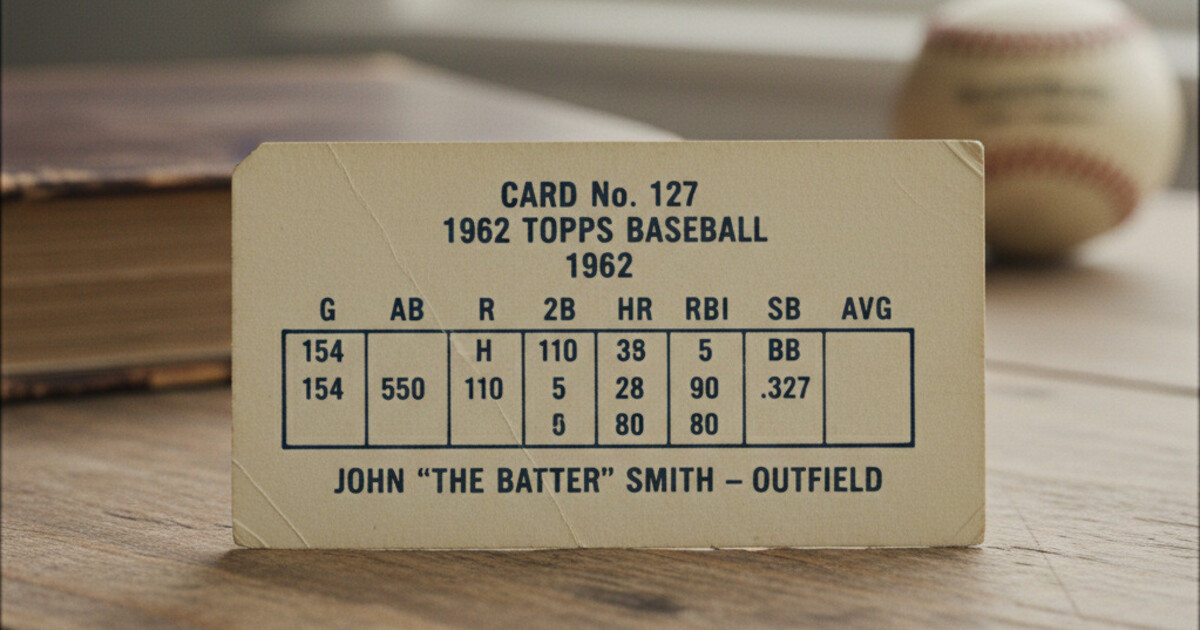
Flip the card over. On the back, you’ll usually find 2 types of numbers that look similar but mean completely different things.
The card number (like #406) is the card’s position in the set checklist. A set might contain 330 base cards, numbered 1 through 330. Card #201 is just the 201st card in that set. The card number by itself has no impact on value.
A serial number (like 123/500) is different. That notation means only 500 copies of this specific card were produced, and yours is copy number 123. Lower print runs drive up value significantly. A card numbered to /50 is rare. A card numbered /10 is very rare. A card numbered /1 is a true one-of-a-kind, called a “1/1” in the hobby, and those can sell for thousands of dollars regardless of the player.
Serial numbers are stamped directly onto the card in foil or ink, usually on the front or along the card face. They’re hard to miss once you know what you’re looking for.
If your card shows no “X/Y” number anywhere, it’s a base card or an unnumbered parallel. That doesn’t mean it’s worthless, but it does mean the rarity case rests on other factors (the set, the player, the condition).
Other Details on a Sports Card Worth Knowing
Once you’ve nailed down the year, set, and card number, the remaining details round out the picture.
Player info is on the front: name, sport, and team. Position, career stats, and sometimes biographical info appear on the back.
Rarity markers show up in fine print near the card number or set name. Words like “Insert,” “Refractor,” “Gold,” “Prizm,” “Holo,” “Chrome,” or “Short Print” indicate the card is a special variation. Insert cards are non-base cards packed at lower odds per box, often with unique designs. Parallel cards are color variants of the base design, produced in far smaller quantities than the base version.
Autograph and relic designations appear when a card carries an on-card or sticker autograph (usually marked “AUTO” or “AU”) or an embedded piece of game-used gear (marked “RELIC,” “MEM,” or “PATCH”). Either addition pushes value well above the base version of the same card.
Condition makes a bigger difference than most people new to the hobby realize. Corners, edges, surface gloss, and centering all factor into how much a card is worth. A card in mint condition can sell for 3 to 5 times what the same card with heavy wear brings. When you’re trying to figure out whether a card is valuable, condition is often the deciding factor between a card worth $5 and one worth $50.
Country and language also appear as fields on some cards. International editions from O-Pee-Chee (Canada), for example, are separate, collectible variations distinct from their US counterparts.
How Stakks Reads a Card for You
Reading all of this by hand takes practice. Knowing a set name on sight means handling enough cards that the designs become familiar. Knowing what a refractor looks like compared to a chrome base card takes some time.
Stakks compresses that learning curve into a single scan. Point your camera at a card and the app identifies the player name, sport, team, year, set, brand, card number, rarity designation, insert name, card type, and condition from a photo. It also shows the current estimated market value, pulled from recent sales data, with a low and high price range and a trend indicator showing whether the card’s value is moving up, down, or holding steady.
Stakks works across baseball, basketball, football, hockey, and soccer. The free tier covers core scanning and collection building. A Pro upgrade unlocks additional features for higher-volume collectors.
If you’ve got a pile of cards you can’t identify and don’t want to spend hours cross-referencing set checklists, scan them. You’ll have the full picture on every card in the time it would take to manually look up one.
Frequently Asked Questions
How do I find the year on a sports card if it’s not printed on it?
For vintage cards, the year isn’t always on the card. Identify the set from design clues like border color, logo placement, and the style of player position notes on the back, then cross-reference with a collector checklist or price guide. Stakks can identify most cards by scan and return the production year automatically, which is the fastest approach for most people.
What’s the difference between a card number and a serial number?
A card number (like #406) is the card’s position in the set checklist and has no effect on value. A serial number (like 123/500) limits how many copies of that specific card exist, which directly affects rarity and price. Serial numbers are stamped in foil or ink on the card face and are clearly visible once you know to look for them.
Does the set name affect how much a card is worth?
Yes, quite a bit. The set determines print run, materials, and collector demand. A Luka Doncic Prizm rookie card trades at multiples of his Donruss rookie from the same year, because Prizm carries more prestige and produces scarcer numbered parallels. Set recognition is one of the first things experienced collectors develop.
How do I tell if my card is an insert or a parallel?
Look for color differences from the base version (parallel) or a set notation on the back that doesn’t match the main set name (insert). Both come at lower odds than base cards per pack, so they’re pulled less frequently. Stakks identifies inserts and parallels from a single scan without requiring you to know the set design.
Can I identify all of this without knowing card sets?
Yes. Stakks identifies the year, set, card number, rarity, and all other details from your camera in seconds. You don’t need years of hobby experience to get the full picture on any card you’re holding.
Start with What’s on the Card
Reading a sports card comes down to year, set, card number, and any special designation. Once you understand what each piece means, you can assess any card without guessing.
If you’d rather skip the manual work, download Stakks free on iOS or Android. Point the camera at any card and get the full identification, rarity details, and current market value estimate in one scan.