
Want to know what your cards are worth? Stakks is free.
You just found a box of old sports cards in the attic — or pulled a shiny parallel from a fresh pack — and the first question is always the same: is this worth anything? The honest answer is that most cards aren’t worth much, but the few that are can be worth a lot, and telling them apart comes down to a handful of specific things you can check yourself.
To tell if a sports card is valuable, look at six factors: the player, the year and set, the card type (base, parallel, insert, or rookie), the condition, any serial numbering, and whether it carries an autograph or memorabilia piece. Then confirm what it’s actually worth by comparing it against recent sold prices for the exact same card. A sharp-cornered rookie card of a star player, especially a numbered parallel or autograph, is where most real value lives.
Below is exactly what each factor means and how to read it off the card in your hand — plus how to skip the guesswork and check a card’s real market value in seconds.
The player matters most — but only with everything else
The single biggest driver of a card’s value is who’s on it. A rookie card of a Hall-of-Famer or a current superstar can be worth hundreds or thousands; the same card design featuring a player who never made it is often worth pennies. Star power, career achievements, and current relevance all push prices up, which is why a player having a breakout season can spike the value of their cards almost overnight.
But the player alone doesn’t set the price. A common base card of even the biggest star is usually worth very little because millions were printed. Value appears when a desirable player meets scarcity and condition — for example, a low-numbered rookie parallel of a top player in clean shape. Think of the player as the multiplier and the other five factors as what it’s multiplying. Start by identifying who’s on the card, then work through the rest.
Year, set, and the “junk wax” trap
The year and set tell you how the card was made and roughly how many exist. Vintage cards (especially pre-1970) are scarce because few survived in good condition, which supports their value. Modern premium sets like Topps Chrome, Bowman, Panini Prizm, and Select are popular because they include sought-after rookies, refractors, and parallels.
The big trap for beginners is the junk wax era — roughly 1987 to 1994 — when manufacturers printed cards in enormous quantities. Those cards feel old and valuable, but supply dwarfs demand, so most sell for next to nothing no matter the player. If your attic box is full of late-’80s and early-’90s commons, temper your expectations. The exceptions are graded gem-mint examples and a few key rookies, but the bulk is low-value. Age is not the same as scarcity.
Card type: base, parallel, insert, rookie, numbered
Two cards of the same player from the same set can be worth wildly different amounts depending on type. Here’s the hierarchy collectors care about:
- Base card — the standard card, printed in the highest quantity. Usually the lowest value.
- Rookie card (RC) — a player’s first official card. Carries a premium, especially for stars. Look for an “RC” logo or “Rated Rookie” badge.
- Insert — a special themed card inserted at lower rates than base cards.
- Parallel — a recolored or refractored version of a card, printed in smaller numbers (e.g. a color “Prizm” or “refractor”). Rarer parallels command big premiums.
- Numbered / serial card — has a stamped serial like
25/99or1/1, telling you exactly how many exist. The lower the print run, the higher the potential value. - Autograph / relic — signed cards or cards with an embedded jersey/memorabilia swatch. Often the most valuable in a set.
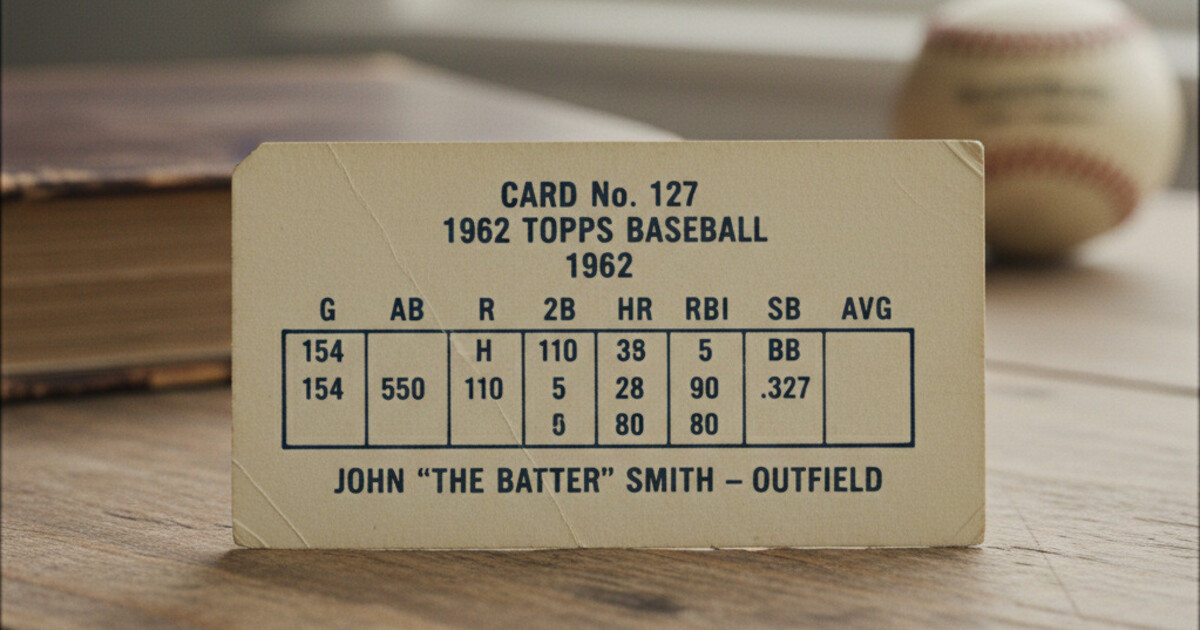
Read the front and back carefully. A small foil stamp, a serial number, or a “Rookie” badge can mean the difference between a $2 card and a $200 one.
Condition can make or break the price
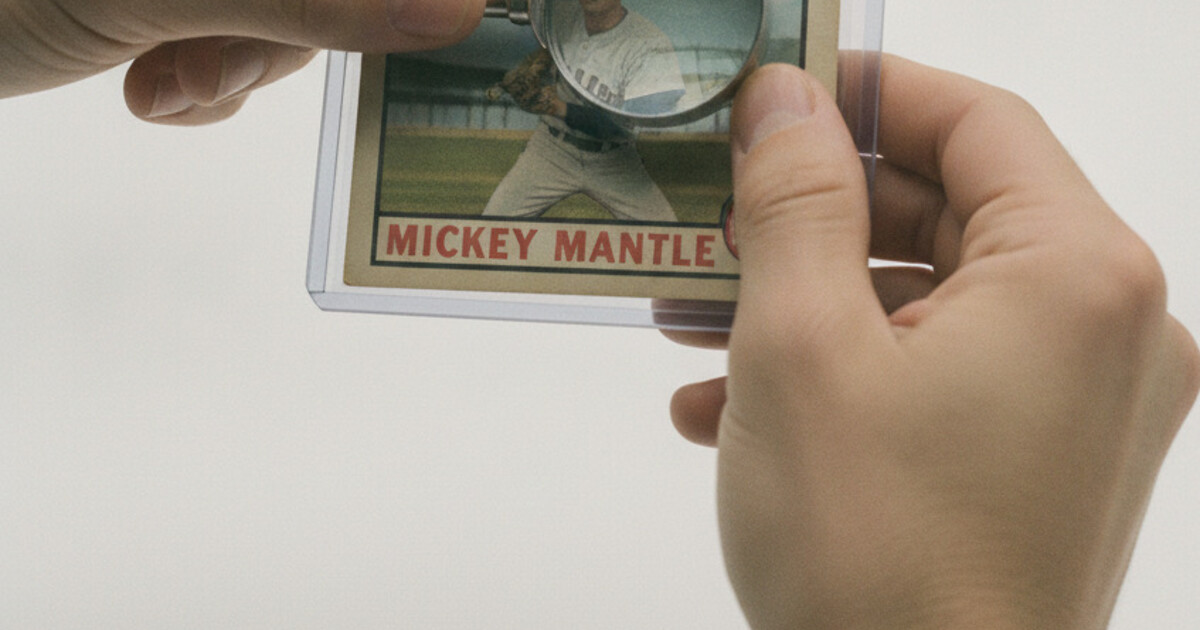
Condition is the factor most beginners underestimate. The same card in pristine shape can be worth ten times more than a creased, off-center copy. Collectors and graders evaluate four things: centering (is the image evenly framed?), corners (sharp or soft/rounded?), edges (clean or chipped/whitened?), and surface (free of scratches, print lines, and creases?).
Hold the card up to good light and check each. A crease — a visible bend line — is the most damaging flaw and is essentially permanent. For high-value cards, professional grading services like PSA, BGS, and SGC assign a numeric grade (1 to 10), and a high grade can multiply the price dramatically: a PSA 10 of a key card often sells for several times what the same card in a PSA 7 brings. You don’t need to grade every card, but you do need to judge condition honestly before estimating value.
How to actually check what it’s worth
Once you’ve identified the card, the only way to know its real value is to compare it against recent sold prices — not asking prices — for the exact same card, in the same condition. The standard manual method is searching eBay’s “Sold” filter for the player, year, set, card number, and parallel, then eyeballing where your card’s condition lands in the range. Price-guide sites like PSA, Beckett, and 130point also track sales.
The catch is that this is slow and error-prone, especially when you’re not sure what set or parallel you’re holding. Misread the card and you’ll compare it against the wrong one. That’s the gap a scanner app fills: it identifies the exact card for you and pulls the market value in one step, so you’re not hunting through listings hoping you matched the right variation.
How Stakks Helps You Spot Valuable Cards
Stakks is built for exactly this moment — you have a card and you want to know what it is and what it’s worth, without becoming an expert first. Point your phone at the card and Stakks identifies the player, year, set, brand, card number, and variation automatically, so you don’t have to decode foil stamps and set names yourself. That alone removes the most common beginner mistake: comparing your card to the wrong version.
Once it’s identified, Stakks shows an estimated market value with a low–high range and a trend indicator, based on recent sales data — so you immediately see whether you’re holding a $1 common or something worth real money. You can then save the card into a collection, and Stakks keeps a running total value of everything you’ve scanned, which is handy when you’re working through a whole box.
A note on honesty: the values Stakks shows are market estimates from recent sales, not guaranteed sale prices or official appraisals, and Stakks isn’t a grading service — it notes condition but doesn’t assign a PSA or BGS number. Use it to triage quickly and find the cards worth a closer look. It works across baseball, basketball, football, hockey, and soccer, so the whole shoebox is fair game.
Frequently Asked Questions
How do I know if my sports card is worth money?
Check six things: the player, the year and set, the card type (base, parallel, insert, or rookie), the condition, any serial numbering, and whether it’s autographed or a relic. Then compare it to recent sold prices for the exact same card. A clean rookie of a star player in a low-print parallel is where the real money usually is.
Are old sports cards always worth more?
No. Cards printed from the late 1980s through the early 1990s — the “junk wax era” — were massively overproduced, so most are worth very little regardless of age. Truly vintage cards (pre-1970) and modern low-print rookies and parallels tend to hold the most value. Age alone doesn’t make a card valuable.
Does a sports card need to be graded to be worth money?
No. Plenty of raw (ungraded) cards sell for real money. Grading mainly matters for high-value cards, where a strong grade like PSA 10 can multiply the price. For most cards, condition and the card itself drive value, and you can check the market price without grading first.
What’s the most important factor in a card’s value?
Usually a combination of the player and the card’s scarcity, filtered through condition. A Hall-of-Fame player’s rookie card in sharp condition will almost always beat a common base card of the same player. But condition can make or break value — creases, soft corners, and off-center printing pull prices down fast.
Stop guessing and start with the card in your hand: scan it with Stakks free to identify it and see its estimated value in seconds.