
Want to know what your cards are worth? Stakks is free.
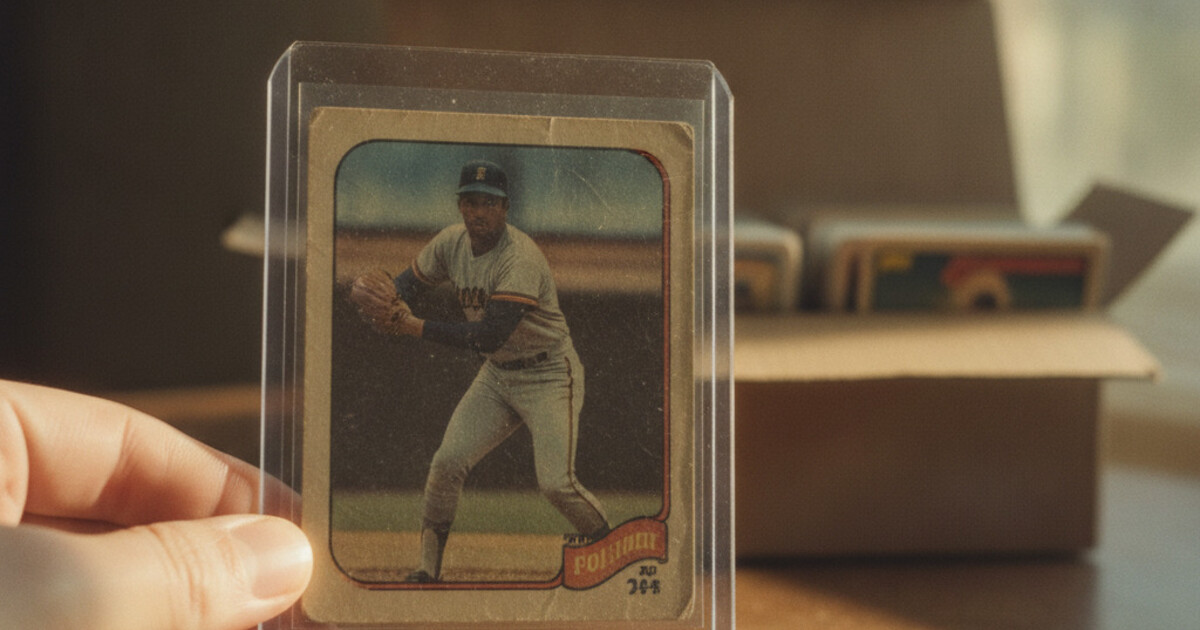
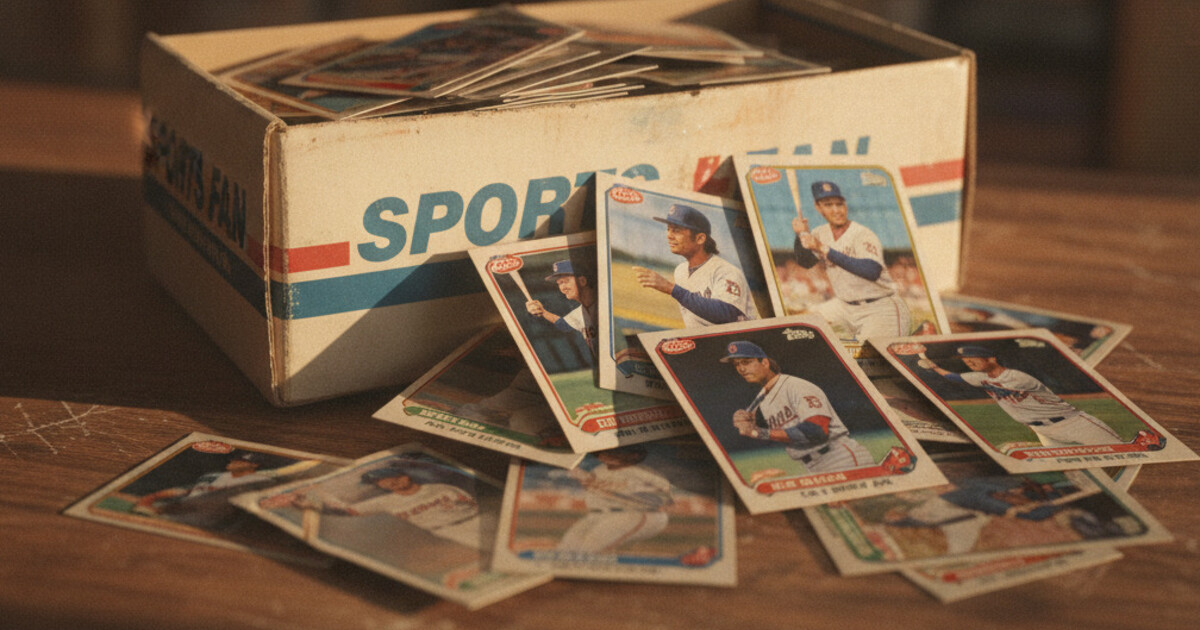
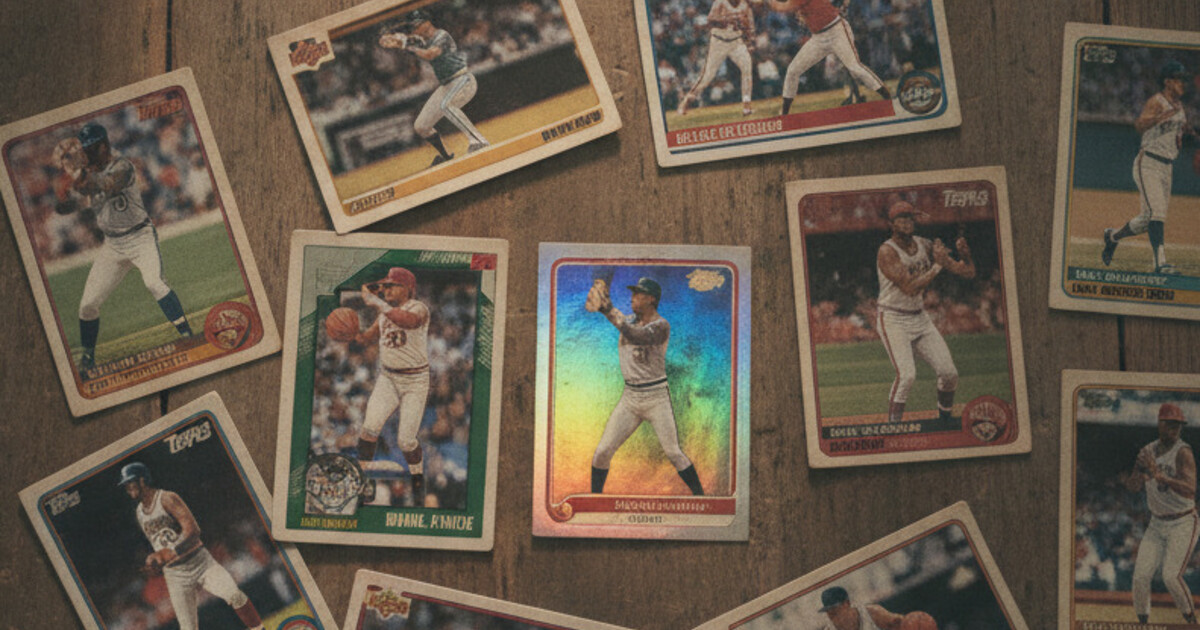
You open a shoebox from the attic and find hundreds of 1990s sports cards. Topps, Upper Deck, Fleer, Donruss. Stars from the era. Your first thought: these must be worth something. Your second thought, after checking a few prices: most aren’t.
The 1990s were the peak of what collectors call the junk wax era, a period when card manufacturers printed so many cards that basic supply and demand math killed the value of almost everything from that decade. But “almost” is the key word. A few 1990s cards are worth real money, and knowing which ones to look for can save you hours of digging through eBay.
Most 1990s sports cards aren’t worth much. Base cards from Topps, Donruss, Fleer, and Upper Deck sell for $0.01 to $0.25 each. The exceptions are short-printed rookies, inserts, and serial-numbered parallels. A 1993 SP Derek Jeter rookie or a 1990 Leaf Frank Thomas RC can be worth hundreds to thousands of dollars.
Why 1990s Sports Cards Are Worth So Little
The junk wax era stretches roughly from 1986 to 1994. During this window, manufacturers figured out that collectors were buying cards as investments, so they responded by printing more. Much more.
Topps produced an estimated 900 million cards per year at the era’s peak. Donruss, Fleer, and Score piled on.
Upper Deck launched in 1989 with a premium price point, but even Upper Deck produced millions of each card. The result: collectors today can buy a full 1990 Donruss set for under $5.
The other problem: collectors at the time knew cards might be valuable, so they stored them carefully in sleeves and binders. A 1990 Topps Ken Griffey Jr. isn’t rare in near-mint condition because millions of collectors kept theirs protected. Every grade from VG to Gem Mint is still abundant.
When supply is high at every condition level, prices stay low. A mint 1991 Fleer Michael Jordan base card sells for around $5 to $15. A mint card of a comparable player from 1961 would be worth hundreds, simply because far fewer survived in good shape and nobody was hoarding them as investments at the time.
That’s the structural problem with junk wax cards. Scarcity drives value in this hobby, and scarcity was stripped from the market almost entirely between 1986 and 1994. See our guide on what makes a sports card rare for a fuller picture of the rarity factors that actually move prices.
The mid-to-late 1990s began to correct. Sets like 1993 SP, 1996 Topps Chrome, and early insert sets introduced genuine scarcity through short prints and serial numbering. Those cards are a different story.
1990s Cards That Are Actually Worth Money
A handful of sets and specific cards stand apart from the junk wax pile because they have what the rest of the era lacks: scarcity.
The 1993 SP Derek Jeter Rookie (#279)
This is the most valuable mainstream card from the junk wax era. Upper Deck’s SP brand ran tighter print runs than standard sets, and Jeter’s rookie from that set has become one of the most sought-after cards of the entire decade.
PSA 10 copies regularly sell in the $15,000 to $30,000 range. Even a PSA 8 is worth $500 to $2,000. If you come across this card, check the corners and surface carefully before assuming a price.
1990 Leaf Frank Thomas Rookie
Leaf was Donruss’s premium brand in 1990, and the Frank Thomas rookie is the most valuable version of his true rookie cards. In near-mint to mint condition, copies sell for $100 to $400. It’s not a five-figure card, but it’s real money in a collection otherwise worth pennies per card.
Shaquille O’Neal 1992-93 Rookies
Shaq’s rookie year produced cards across multiple sets. The Stadium Club RC and the Upper Deck RC are the two worth checking. The Stadium Club in PSA 10 condition has sold for $300 to $700.
These aren’t as common as other era cards because Stadium Club was already limiting print runs compared to standard Topps base sets.
1996-98 Topps Chrome Refractors
Topps Chrome launched in 1996 as a chromium version of the base Topps set, with refractor parallels short-printed from day one. A 1996 Topps Chrome Derek Jeter Refractor in PSA 10 has sold for over $5,000. These aren’t “junk wax” in the traditional sense, but they sit in the 1990s decade and get overlooked by collectors who assume everything from that era is worthless.
Insert Cards from 1993 Onward
Starting in 1992 and picking up momentum in 1993, manufacturers began inserting special cards at stated odds. Topps Finest, Fleer Ultra, and Donruss Elite introduced limited-run parallels and insert tiers.
If you have an insert from this period with a star player, it’s worth checking. The base cards from these same sets aren’t special, but the inserts often were.
How to Tell If Your 1990s Cards Have Value
Pull them out and go through this quick checklist.
Check the brand and set name. Base Topps, Donruss, Score, and Fleer from 1986 to 1994 are almost certainly worth pocket change. Upper Deck, Leaf, Stadium Club, Finest, SP, and Chrome are more likely to contain standout cards.
Look for serial numbers. A card stamped with a number like “47/99” or “123/500” was printed in limited quantities. Even 1990s serial-numbered cards often have real value, especially for star players. The smaller the number on the stamp, the rarer the card.
Check for insert designations. Words like “Refractor,” “Gold,” “Finest,” “Elite,” or “Chrome” printed on the card itself are signs you’re not looking at a base card. Inserts were packed at lower odds and tend to carry more value.
Identify the player’s career. A 1990s Ken Griffey Jr. insert card is worth researching. A 1990s backup catcher’s base card, no matter the set, probably isn’t.
Evaluate condition for potentially valuable cards. For $0.10 base cards, condition barely matters. But a 1993 SP Jeter in PSA 6 is worth far less than one in PSA 10.
If you think a card might be worth $50 or more, read our guide to graded vs raw cards before assuming a sale price. Condition creates wide price gaps on any card worth chasing.
How to Check the Current Value of Your 1990s Cards
Use eBay sold listings. Search the exact card (player name plus year plus set name plus card number). Filter by “Sold” under listing status. This shows you actual market prices, not wishful asking prices.
A typical 1990s base card search will return $0.05 to $0.50 results, often in bulk lots. That’s the reality for most cards in a junk wax collection. For inserts and short-printed rookies, you’ll see a wider range based on condition.
Scan the card with Stakks. The app identifies a card from a photo and shows the current estimated market value based on recent sales data. For a box of 1990s cards, scanning is faster than manual research. You can work through a stack quickly, see each card’s estimated value, and save anything worth tracking to a named collection.
Stakks shows a price range (low and high) along with a trend indicator, so you can see whether a card’s market is rising, falling, or flat. That context is useful for 1990s standouts, where prices can shift when a player gets a Hall of Fame induction or a major anniversary brings renewed collector interest.
Frequently Asked Questions
Are 1990s sports cards worth anything?
Most aren’t. The junk wax era (roughly 1986-1994) saw manufacturers print hundreds of millions of base cards, so supply far outstrips demand. A typical 1990s base card is worth $0.01 to $0.25. The exceptions are short-printed rookies, early inserts, and serial-numbered parallels from 1995-1999.
What makes a 1990s sports card valuable?
Low print run is the main driver. That means numbered parallels, rare inserts, and short-printed rookies. Player career matters too. A 1993 SP Derek Jeter RC or a 1990 Leaf Frank Thomas RC are worth real money because both have genuine scarcity combined with all-time-great players.
What is the junk wax era?
The junk wax era covers roughly 1986 to 1994, when card manufacturers printed billions of cards to meet speculator demand. Topps, Donruss, and Fleer flooded the market. Most cards from this period were hoarded in mint condition by collectors at the time, so near-mint examples aren’t rarer than lower grades today.
Are 1990s football and basketball cards worth more than baseball?
For most base cards, no. The same overproduction hit all major sports. Basketball has a few standouts from this era, like Shaquille O’Neal rookies from 1992-93 and certain Michael Jordan base cards. Football 1990s cards are similarly low-value except for a few short-printed sets and inserts.
How do I find out what my 1990s cards are worth today?
Check recent sold listings on eBay, not asking prices. Search the exact card with player name, year, set name, and card number. You can also scan the card with Stakks, which pulls current market estimates from recent sales data and shows you a price range based on actual transactions.
If you’ve got a shoebox of 1990s cards and want a quick answer on what’s worth keeping, Stakks is the fastest way to find out. Scan a card, see the current market estimate, and save the keepers to a collection. Download the app at stakks.app.