
Want to know what your cards are worth? Stakks is free.
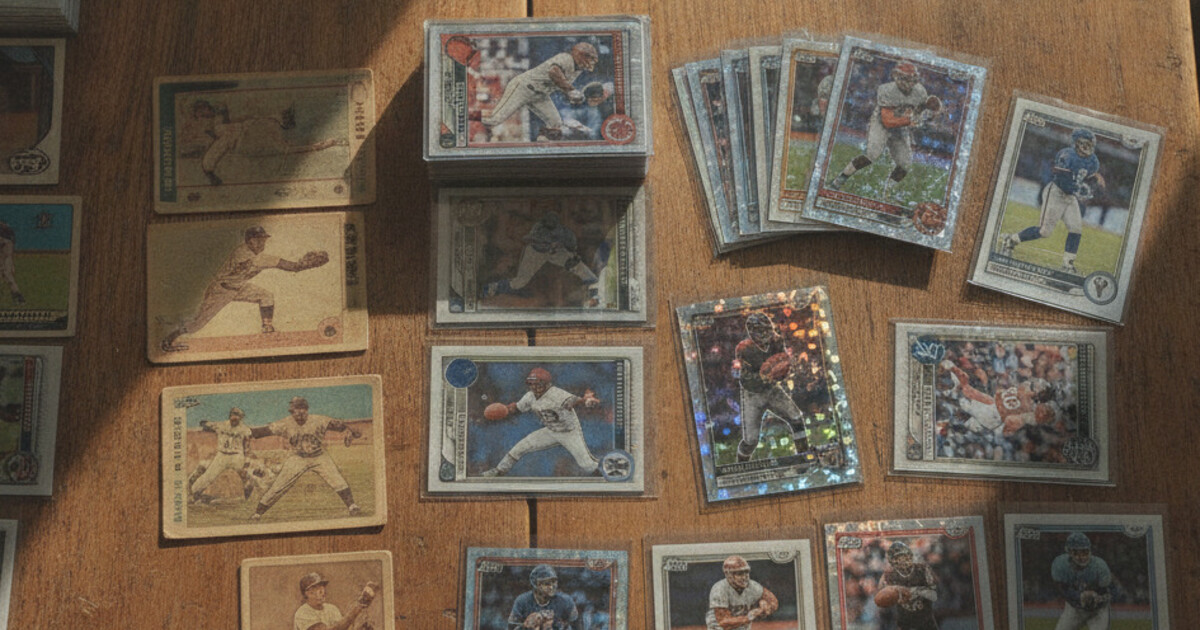
You picked up a Topps card and now you want to know what it’s worth. Maybe it came out of a pack you bought at Target. Maybe it’s something older from a shoebox in a closet. Either way, Topps is the world’s oldest continuous sports card brand, and the value of a Topps card runs from a dime to $12.6 million depending on exactly what you’re holding.
This guide breaks down what drives Topps card values, what each major product line actually sells for, and the fastest way to get a real number on any card in your collection.
Most Topps base cards sell for $0.10 to $2. Chrome base cards typically range from $1 to $15. Rookie cards, refractors, and numbered parallels start at $5 and run into the hundreds or thousands for star players. The set, player, year, card type, and condition determine where on that spectrum your specific Topps card lands.
What Determines a Topps Card’s Value
Four variables control the price of any Topps card, and they interact with each other.
The product (set) matters first. A Mike Trout base card from Topps Series 1 sells for $1 to $4. The same player’s card from Topps Dynasty (a high-end set with embedded relics and autographs) can sell for $500 to $5,000+. The product dictates production volume, card stock, and what kind of hits (autographs, relics) appear inside.
The player’s career arc drives demand. Rookies of top prospects command premiums immediately. A card can appreciate 10x in weeks if a player goes on a breakout run or wins a major award. Cards of older players without recent performance often drop even if they once carried value.
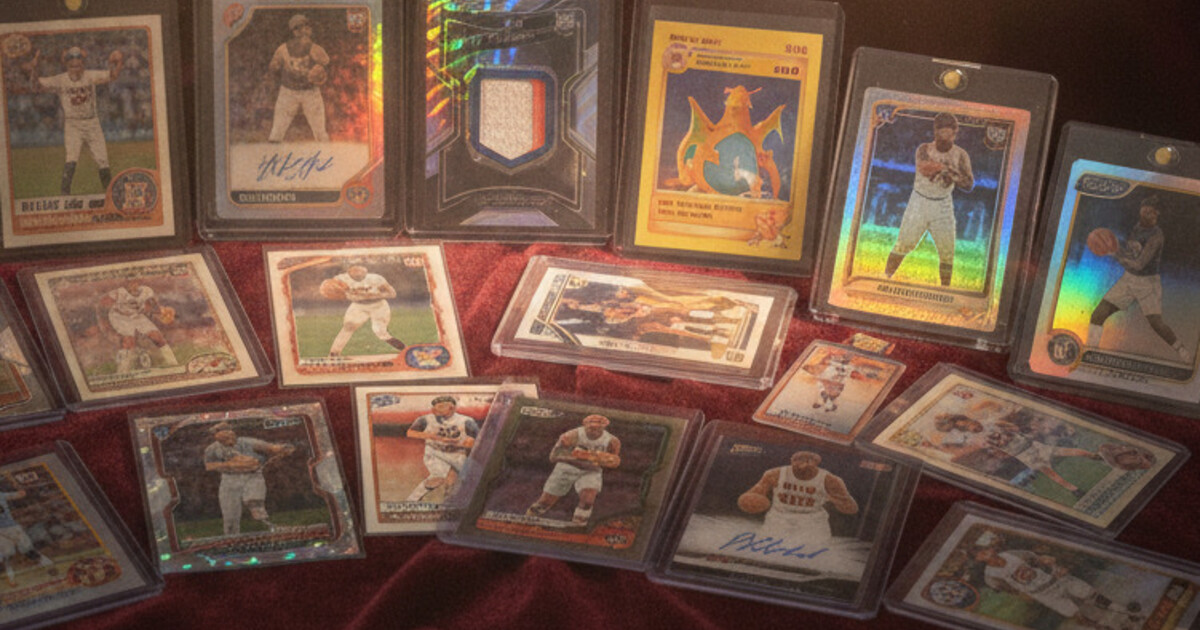
The card type separates common from collectible. Base cards are printed in the millions. Parallels are shorter runs of the same image on different-colored stock. Autographs carry the player’s certified signature. Relics contain embedded jersey or bat material. Numbered cards have a print run stamped on them (like /50, meaning 50 copies total exist).
Condition sets the ceiling. A 1952 Topps Mickey Mantle in worn condition sells for $10,000 to $30,000. That same card graded PSA 9 sold for $12.6 million in 2022. Same card, same player: condition accounted for nearly all of the difference.
Topps Base Cards: What They Actually Sell For
The phrase “Topps card” covers a huge range of products released every year since 1952. Here’s what you can realistically expect for the most common Topps products.
Topps Series 1 and Series 2 are the most widely produced sets. Base cards of bench players and common roster spots sell for $0.10 to $0.50. Stars and recognizable names (Aaron Judge, Shohei Ohtani, Bryce Harper) range from $1 to $8 raw. Parallel versions of those cards scale with print run: a gold parallel of a top player can sell for $30 to $80.
Topps flagship base cards from the 2024 and 2025 seasons sold between $0.10 and $0.50 for non-stars on eBay completed listings. All-Star-caliber players cleared $2 to $8 for raw copies. Gold parallels numbered to 2026 copies (issued one per Series 1 hobby pack) averaged $0.50 to $3 for common players. Black parallels numbered to 63 copies of Ohtani and Judge sold in the $25 to $75 range during his 2024 MVP-winning season. Printing plates (unique 1/1 cards) sold for $80 to $350 depending on player and condition. Topps Heritage short prints (SPs), which carry roughly one-third the print run of standard base cards, added a 3x to 8x price premium over the standard version of the same card. That’s why two copies of what looks like the same Heritage card can have completely different values.
Topps Heritage reproduces the design of vintage sets, re-released with current players. A Heritage base of an active star typically sells for $1 to $5. Heritage short prints (alternate photos at reduced print runs) command $15 to $100+ depending on the player. High-number short prints in Heritage are among the most actively tracked cards in the hobby.
For a broader breakdown of how factors like condition, year, and player tier affect values across sports, see How to Tell If a Sports Card Is Valuable.
Topps Chrome: Where Value Concentrates
Topps Chrome is where most of the collector attention goes in baseball cards. Chrome uses a proprietary acetate-infused stock that creates the glossy, prismatic look collectors recognize instantly. That card stock alone makes Chrome significantly more valuable than paper Topps flagship.
Topps Chrome base cards of star players sell for $3 to $25 raw. A Chrome Rookie Card (marked RC) of a highly anticipated prospect starts at $10 for a common player and runs to $200+ for a top draft pick. When Elly De La Cruz had his 2024 Topps Chrome RC, raw copies were selling for $30 to $80 during his early-season breakout; his paper Series 1 card sat at $1 to $3 at the same time.
Refractors are the parallel tier in Chrome. The base Refractor (/499) adds roughly 3x to 5x over the base Chrome price. Blue Refractors (/150) roughly double that. Gold Refractors (/50) command 10x to 20x the base Chrome price for top players. The Superfractor (the 1/1 version of any Chrome card) is its own category, with notable player Superfractors selling from $1,000 to $100,000+.
Chrome autographed rookies combine every premium: Chrome stock, RC designation, and a certified signature. A first-round pick’s Chrome auto RC in the year of their debut typically sells for $50 to $500, and the number climbs fast if the player performs.
For more on what makes refractors and parallels so much more valuable than base cards, see What Is a Refractor Card.
Topps Finest, Allen & Ginter, and High-End Sets
Beyond flagship and Chrome, Topps publishes premium-tier products: Finest, Allen & Ginter, Dynasty, Topps Now, Archives, and more. Each targets a different collector audience with a distinct price range.
Topps Finest is Chrome’s higher-end cousin. Finest base cards sell for $2 to $15. Finest autograph rookie cards have been among the hobby’s most coveted pieces since the mid-1990s, ranging from $40 to several thousand for elite prospects. The 1993 Derek Jeter Topps Finest RC, one of the most iconic cards from that era, sells for $1,000 to $3,000 raw.
Allen & Ginter is an artistic, mini-format set with its own collector base. A&G base cards of major stars sell for $1 to $10. Mini parallels and numbered cards run $5 to $100.
Topps Dynasty is an ultra-premium product (boxes retail for $300 to $500+) with embedded autographs and relics. Cards from Dynasty regularly sell in the $100 to $5,000 range, with Hall of Famer one-of-ones reaching five figures.
Knowing which Topps product your card came from is the first step to pricing it accurately. Stakks identifies the exact set automatically when you scan the card, with no cross-referencing required.
How to Look Up Your Topps Card’s Value
The most reliable method is eBay’s completed sales (filter to “Sold”). You need four pieces of information: the player’s name, the year, the set name, and the card number (usually printed on the back as a fraction, like #25/50 or just #147 for a base card). If the card has a parallel color, note that too.
eBay sold listings show what buyers actually paid in the past 30 to 90 days. That’s real market data, not a price guide estimate from months ago.
A faster approach: scan the card with Stakks. Point the camera at the front of the card, and Stakks identifies the player, year, set, variation, and condition, then pulls an estimated market value from recent sales data. The scan takes 2 to 3 seconds. You don’t need to know the card’s set name or number in advance; Stakks reads it for you.
For more on how to look up a card’s value and where pricing data comes from, see What’s My Card Worth? The full value guide.
Frequently Asked Questions
Are old Topps cards worth money?
Most common Topps cards from the 1970s through early 1990s sell for $0.25 to $5 because millions were printed and most survived. Pre-1970 Topps cards of Hall of Famers in good condition are a different story. Mickey Mantle, Willie Mays, and Sandy Koufax cards from the 1950s and 1960s regularly sell for hundreds to hundreds of thousands of dollars depending on grade.
What makes a Topps Chrome card more valuable than regular Topps?
Chrome uses an acetate-infused cardstock that grades better, looks sharper, and holds condition more consistently than paper stock. The hobby has assigned a significant premium to Chrome over 20 years because it grades well and collects cleanly. Chrome versions of the same card typically sell for 5x to 15x more than the paper base version.
What is the most valuable Topps card ever sold?
The 1952 Topps Mickey Mantle PSA 9 sold for $12.6 million at Heritage Auctions in August 2022, setting the all-time record for a baseball card. For a full look at the hobby’s biggest auction records, see What Are the Most Expensive Sports Cards Ever Sold.
How do I know if my Topps card is a rookie card?
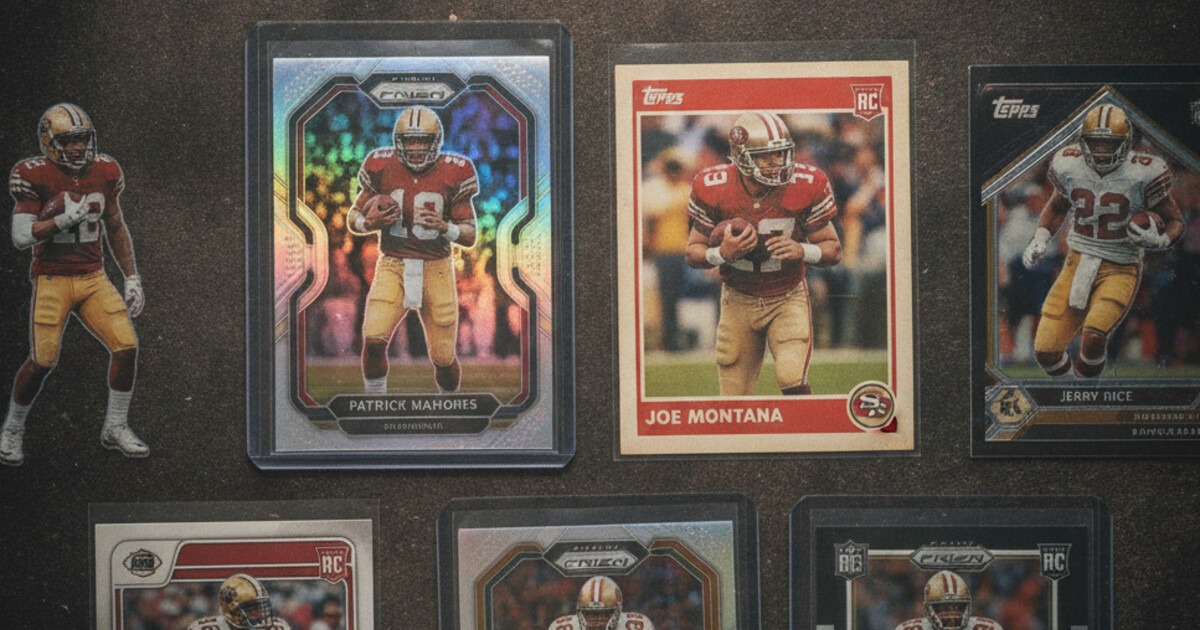
True Topps rookie cards carry the official RC (Rookie Card) shield logo. Cards printed before the logo era (pre-1989 in most sets) are considered vintage rookies without the logo but are still treated as rookie cards by collectors. When you scan a card with Stakks, the app flags the RC designation automatically.
Are Topps cards from the 1980s valuable?
Most 1980s Topps base cards sell for $0.10 to $1 because production was high. Exceptions include key rookie cards: the 1984 Don Mattingly RC and 1987 Barry Bonds rookie card sell for $15 to $300+ depending on condition. Knowing exactly which card you have is the starting point for any valuation.
Conclusion
Topps card values span $0.10 to millions, and the gap between those extremes usually comes down to four things: which product the card came from, who’s on it, what type of card it is (base, rookie, auto, numbered), and what condition it’s in. A common base card from a recent set has almost no trade value. A numbered Chrome autograph rookie of a breakout player can be worth serious money.
If you’re sorting through a collection and want fast answers, scan your Topps cards with Stakks. Point your camera, and you’ll know the set, the variation, and the estimated market value before you set the card back down. Download Stakks free at stakks.app.