
Want to know what your cards are worth? Stakks is free.
Every hobby has one card that outsiders know. For basketball — arguably for all of sports cards — it’s the 1986 Fleer Michael Jordan #57. It’s the card that anchors the entire vintage basketball market, the one that made national news at auction, and the single most counterfeited piece of cardboard in the hobby. If one surfaced in a family collection, or you’re wondering whether that “great deal” online is real, here’s what it’s actually worth.
A genuine 1986 Fleer Michael Jordan #57 has recently sold for roughly $3,500 raw, $15,000–30,000 in PSA 8, $20,000–29,000 in PSA 9, and $375,000 or more in PSA 10. Even low-grade authentic copies bring thousands. All numbers are estimates from recent sales — and authentication comes before valuation on this card.
Here’s the grade-by-grade picture, the Star Co. asterisk, and why condition math on this card is unlike anything else.
Why One Card Carries the Whole Vintage Basketball Market
By 1986, basketball cards were nearly dead — no major manufacturer had printed a full NBA set in years. Fleer’s 132-card comeback set landed exactly as a second-year guard in Chicago was becoming the most famous athlete on earth. Jordan’s #57, with the set’s bold red-and-blue border, became his first card in a true pack-issued national set.
Scarcity did the rest. The 1986 Fleer print run was modest by the standards of the era that followed — nothing like the million-copy junk-wax printings of 1989-92 — and the design is brutally condition-sensitive: the red border shows every chip, and the cut was frequently off-center. High-grade survivors are genuinely rare, which is why the price ladder below is so steep.
1986 Fleer Jordan #57 Value by Grade
Based on recent sales:
- Raw (ungraded, presentable): roughly $3,500, with recent sales as high as $3,700. Rough copies with creases or heavy wear trade lower but still in four figures.
- PSA 5–6 (EX to EX-MT): mid four figures to around $10,000.
- PSA 8 (NM-MT): roughly $15,000–30,000.
- PSA 9 (Mint): roughly $20,000–29,000 in recent sales.
- PSA 10 (Gem Mint): $375,000 and up — only a few hundred exist, and peak-market sales have gone far higher.
Note what that curve means: a one-grade difference on this card is a house-down-payment difference. Centering is usually the deciding factor between otherwise similar copies, which is why the graded vs raw decision isn’t optional here — an authentic raw Jordan rookie should effectively always be authenticated and graded before sale.
The Star Co. Asterisk (1984-85 Star #101)
Purists will point out Jordan has an earlier card: the 1984-85 Star Co. #101, issued while Fleer’s set was still two years away. Star cards were sold in sealed team bags through hobby dealers rather than retail packs, and for decades PSA wouldn’t grade them, which kept them out of the mainstream registry culture. The hobby’s convention settled long ago: Star #101 is an “XRC” (extended rookie), the 1986 Fleer is the rookie card. The Star card is valuable and historically interesting — but it’s a specialist market with its own authentication headaches, and it doesn’t diminish the Fleer’s standing.
There’s also the 1986 Fleer sticker #8 — Jordan’s insert from the same set. It’s a real Jordan from 1986 and sells for a fraction of #57 (still strong money in high grades). Don’t confuse the two when pricing.
Assume Fakes Until Proven Otherwise
The 1986 Fleer Jordan has been counterfeited continuously since the early 1990s, and modern reprints are good enough to fool a quick glance. Baseline checks:
- Size: exactly 2.5 × 3.5 inches. Many fakes miss by a millimeter — measure against a common card.
- Border printing: the red should be crisp against the blue with no bleeding; chipped-but-sharp beats smooth-but-blurry.
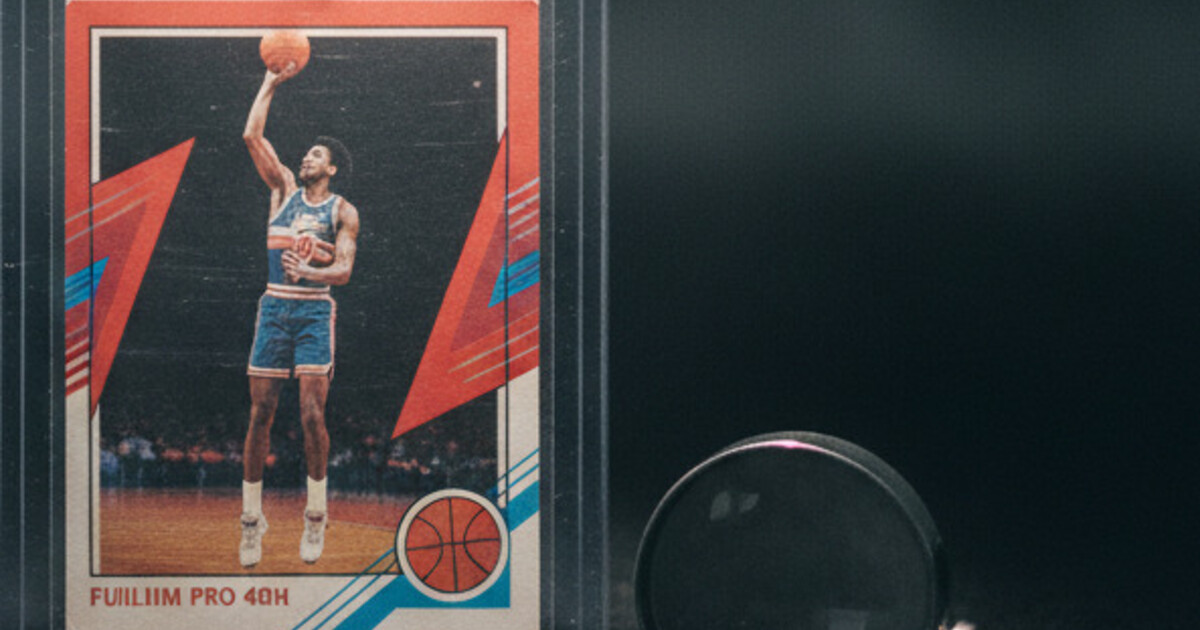
- Print pattern: under a loupe, genuine cards show clean rosette dot patterns in the photo; fakes blur or band.
- The deal itself: a raw Jordan rookie priced at $500 “because the seller doesn’t know cards” is the oldest trick in the hobby.
Our fake and reprint spotting guide covers the full process. For a card at this price level, the final word belongs to professional authentication — treat every raw copy as unverified until then.
If You Don’t Have the Fleer: What Other Jordans Are Worth Money
Most collections don’t hide a 1986 Fleer — but Jordan cards from later sets carry real value too, especially his rarer inserts and parallels from the mid-90s. The most valuable basketball cards guide covers which ones deserve a closer look, and his 1991 Upper Deck baseball card from the White Sox minor-league stint remains one of the hobby’s favorite curiosities.
Check What You’re Holding
Whether it’s a possible Fleer rookie or a shoebox of ’90s Jordans, the first step is knowing exactly which card you have. Scan it with Stakks — it identifies the set, year, and card number and returns a market estimate with a low–high range from recent sales (an estimate, not an appraisal; anything Jordan-shaped and expensive deserves professional authentication too). You can also try a scan free in your browser — no download, three free scans.