
Want to know what your cards are worth? Stakks is free.
Getting a card graded takes real effort: finding the right card, submitting it, waiting weeks or months, paying the service fee. Once the slab comes back, it’s tempting to think the hard part is done. The case is sealed. The grade is locked. Most collectors drop it in a shoebox and move on.
The best way to store graded cards goes further than that. The polycarbonate case protects against bending and fingerprints, but it doesn’t block UV light, control humidity, or survive a hard drop onto concrete. Those threats are specific and measurable, and the price difference between a card in a pristine slab and one in a cracked or yellowed holder can run into the hundreds or thousands of dollars.
The best way to store graded cards is in a dedicated slab storage box with dividers or foam slots, at 60-70°F and 40-50% relative humidity, away from direct light. For display, use a UV-blocking acrylic case. The slab guards against bending and fingerprints but not UV yellowing, humidity infiltration, or drops that crack the case.
Why Graded Card Storage Still Matters
A graded slab feels permanent. The grade is locked in and the card is sealed. Neither of those things means the slab can’t be damaged.
Graded sports cards arrive in polycarbonate slabs that measure approximately 3.5 by 5 inches and half an inch thick. PSA, BGS, and SGC cases protect against bending, fingerprints, and casual handling, but they don’t block UV light, which yellows the acrylic and fades the card inside over 2 to 5 years of window exposure. Humidity above 60% relative humidity can seep into older slab seals over time and warp or lift the card or label inside. Physical impacts crack the case, and a cracked slab requires resubmission at a cost of $15 to $50 or more depending on the grading service tier. A PSA 10 Luka Doncic 2018-19 Prizm sells for $4,000 to $6,000 in a clean, undamaged slab. The same card with a cracked or scratched holder typically sells for 20 to 40% less, as buyers price in resubmission costs or demand a discount for the presentation loss.
Scratches on the outer acrylic don’t change the grade, but they signal to buyers that the card was poorly stored. That perception drops the sale price even when the card inside is perfect.
Getting a card graded is how you establish the grade. Storage after that is how you protect it.
Best Ways to Store Graded Cards
The right setup depends on your collection size and what your slabs are worth.
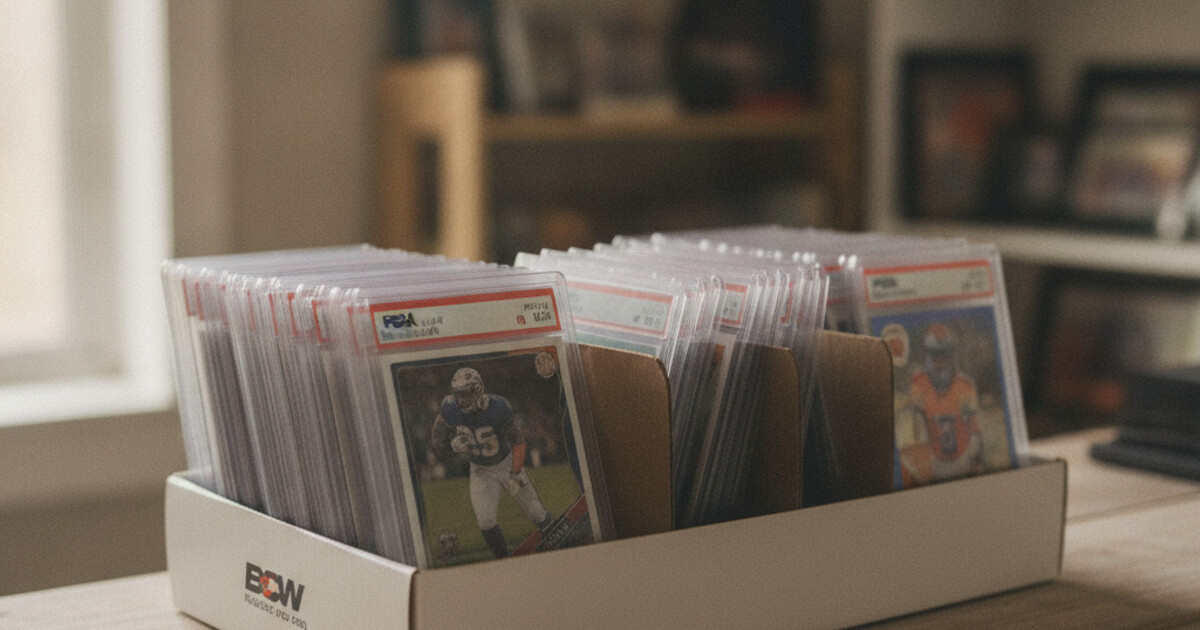
Dedicated slab storage boxes are the standard for bulk storage. The BCW Graded Card Storage Box is the most widely used option. It holds standard-sized PSA, BGS, and SGC slabs in individual slots with cardboard dividers, which stops slabs from scratching each other and prevents lateral shifting. A standard box holds around 20 slabs. They stack cleanly on shelves and cost under $5 each, so there’s no reason to skip them.
For valuable slabs, padded or foam-lined cases add another layer. Pelican cases with custom foam cutouts work well for cards worth $500 or more. The foam absorbs impact before it reaches the slab. A $3 BCW box is fine for a $30 card. A $2,000 Patrick Mahomes auto warrants more thought.
Slab binder pages are an option for browsing and showing off. You can slide PSA or BGS slabs into oversized pages designed for them and put them in a ring binder. It works, but slabs shift in pages with regular use and scratch each other over time. Binder storage is better for display rotation than long-term housing.
For high-value slabs, a fireproof lockbox or safe is worth adding. Most fireproof safes keep interior temperatures below 350°F during a house fire, which polycarbonate and cardstock can survive. The bigger protection is against theft and water damage from firefighting. A bolted-down lockbox covers both.
One rule that applies regardless of the storage method: don’t stack loose slabs directly on top of each other without dividers. Stacking 30 slabs freely puts real downward pressure on the bottom ones and scratches the acrylic surface over time. Individual slots or cardboard dividers between rows are the fix.
If you want to understand how raw cards should be stored before they go to a grading service, our guide on how to store sports cards covers the full supply hierarchy from penny sleeves to toploaders.
Environmental Threats to Graded Cards
Slabs don’t exist in a controlled environment by default. Three factors cause most long-term damage.
UV light is the threat collectors underestimate most. Standard glass passes most UV radiation. Standard clear acrylic passes almost all of it. A slab sitting near a south-facing window gets daily UV exposure that yellows the polycarbonate gradually and fades the card’s printed colors and the label inside. UV-blocking acrylic, often labeled as cast acrylic or UV-filtering acrylic, blocks around 98% of UV radiation. If your slabs are on display anywhere near a window or artificial grow lighting, UV-blocking cases are the practical upgrade.
Humidity is the second concern. The target range is 40-50% relative humidity. Above 60%, you’re creating conditions where mold can grow in the storage area and where older or lower-grade slab seals can be slowly infiltrated over months or years. Below 30%, some cardboard-backed cards can dry out and become brittle over long storage periods. A small dehumidifier or a Boveda humidity control pack inside a closed cabinet keeps levels stable without constant monitoring.
Temperature stability matters more than the actual temperature reading. A room that swings between 60°F at night and 85°F during the day puts repeated thermal expansion and contraction stress on the materials inside the slab. A consistent 65-70°F is ideal, but a consistent 75°F is better than daily 25-degree swings. Basements with moisture problems, attics with extreme seasonal temperatures, and garage shelves near exterior walls are all poor choices for long-term slab storage.
The same environmental logic applies before grading. The guide on how to protect sports cards from damage covers the full range of threats that affect raw cards before submission.
Displaying Graded Cards Without Causing Damage
Display is where collectors most often cut corners on UV protection. A slab propped up near a window looks good for the first year. By year three, the label is faded and the acrylic is starting to yellow.
Single-slab UV-blocking stands are the simplest display option. They angle one slab upright on a desk or shelf and cost $1 to $3 each. The key detail is making sure the stand uses UV-filtering acrylic on any clear panels, not standard clear acrylic.
Wall-mounted slab frames hold multiple slabs in a grid. They keep cards off horizontal surfaces where dust accumulates, look clean on a wall, and work well for a curated display of featured cards. Pair them with UV-filtering acrylic on the front panel for full protection.
Multi-slab display cases with UV glass are available for collectors who want a more formal setup. These are purpose-built for valuable items and combine UV protection with a lockable enclosure, which adds physical security for high-value pieces.
One thing to avoid with any slab on display: cleaning the surface with solvents or rough cloths. Solvents cloud polycarbonate permanently. Abrasive cloths leave fine scratches that are visible under light. A soft microfiber cloth with plain water, or a plastic cleaner specifically rated for polycarbonate, handles fingerprints and dust without damaging the surface.
The general rule: anything on permanent display needs UV protection. Anything in long-term storage needs humidity and temperature control.
How to Track Your Graded Card Collection
Organized storage and environmental control handle the physical side. The next problem is knowing what you have and what it’s worth.
Collectors with 50 or more slabs across several storage boxes lose track of specific cards faster than they expect: when a card was graded, which collection it belongs to, how the market is moving on that player or set. A card that graded in 2024 and has been sitting in a box since then might have appreciated significantly or dropped, and you won’t know without actively checking.
Stakks lets you scan any card and organize it into named collections with current market estimates, low and high price ranges, and price trend indicators. If you scan a card before sending it to a grading service, you’ll have a digital record of what you submitted, an estimated value baseline from that date, and a reference point for comparing how much the grade affects the card’s market value when it comes back. You can build separate Stakks collections for graded and raw cards to track both sides of your inventory. Scan your first card and see current market data at stakks.app.
Frequently Asked Questions
Can graded cards get damaged inside the slab?
Yes. The slab protects against bending and fingerprints, but UV light can yellow the acrylic and fade the card inside over 2 to 5 years of window exposure. Humidity above 60% can infiltrate older slab seals. A drop that cracks the case puts the card itself at risk.
What’s the best box for storing graded cards?
Dedicated graded card storage boxes like the BCW Graded Card Storage Box hold standard PSA, BGS, and SGC slabs with cardboard dividers to prevent scratching and shifting. They cost under $5, hold around 20 slabs, and stack cleanly on shelves.
Should I stack graded cards directly on top of each other?
Avoid stacking more than 10 to 15 slabs loosely on top of each other. The weight on the bottom slabs scratches the acrylic over time. Storage boxes with individual slots or dividers are much better for long-term storage.
How do I display graded cards without UV damage?
Use a UV-blocking acrylic display case or wall-mounted slab frame. Standard clear acrylic passes UV light and can yellow the slab and fade the card’s colors over several years near a window. UV-filtering acrylic blocks around 98% of UV radiation.
Does humidity affect graded cards in slabs?
Humidity above 60% relative humidity can seep into older slab seals over time and affect the card or label inside. Keep storage areas at 40-50% relative humidity. A small dehumidifier or Boveda pack in a closed cabinet keeps levels stable.