
Want to know what your cards are worth? Stakks is free.
Most collectors damage their cards without touching them. A shoebox in a hot attic, a rubber band around a stack of rookies, a binder with top-loading pages that let cards slide and scratch against each other. Learning how to store sports cards properly is what separates a collection that holds its value from one that depreciates before you ever look up a price.
The good news: proper card storage doesn’t have to be expensive. The right supplies cost a few cents per card. The setup takes an afternoon.
Store every card in a penny sleeve first. Valuable cards go into a toploader or Card Saver on top of the sleeve for rigid protection. High-priority display pieces belong in magnetic one-touch cases. For bulk sets, use binders with side-loading 9-pocket pages. Keep everything in a cool, dry spot away from heat and direct light.
The Storage Hierarchy (and Why Order Matters)
Think of card storage as layers. Every card starts with a penny sleeve. That goes inside a harder outer shell depending on the card’s value and how often you’re handling it.
The layers, from lightest to most protective:
- Penny sleeve (base protection, all cards)
- Toploader or Card Saver (rigid outer shell, valuable cards)
- Magnetic one-touch case (frameless display, PC hits and high-value cards)
- Screwdown holder (lockdown display, true grail cards)
Skipping the penny sleeve and going straight to a toploader scratches the card surface against the hard plastic edges inside. Always sleeve first.
Sports card condition has an outsized effect on price. A Luka Doncic 2018-19 Panini Prizm rookie card in raw, near-mint condition sells for roughly $40-60 on eBay. The same card graded PSA 9 (Mint) trades at $200-400. A PSA 10 (Gem Mint) routinely reaches $4,000-6,000, and population report census numbers show only a fraction of submitted copies earn the top grade. The entire price gap comes down to surface scratches, corner wear, and print defects that accumulate when cards are stored loosely in shoeboxes or rubber-banded together. A simple penny sleeve (roughly $0.01 per card when bought in bulk) prevents almost all handling scratches before they happen. Adding a toploader takes the card from portable to structurally rigid, which is what PSA and BGS want to see on submission. The math is simple: a $0.02 sleeve-and-toploader investment preserves the potential for a 100x price ceiling.
Penny Sleeves: The Foundation of Card Storage
A penny sleeve is a thin poly bag that fits around a standard card (2.5 x 3.5 inches). They cost around $10-15 per 1,000, which works out to about a penny each. Every card you handle should have one.
Sleeves protect against finger oils, dust, and micro-scratches from card-to-card contact. They’re also the first thing a grader looks past when examining a submission. A card with sleeve swirls from careful storage is better than one with finger smudges from bare handling.
For thicker cards (jersey relics, autograph booklets, oversized cards), standard penny sleeves tear. You need thick-card sleeves rated for 55-130pt thickness depending on the card. Always check the card’s thickness before buying sleeves in bulk.
Toploaders and Card Savers: Rigid Protection for Valuable Cards
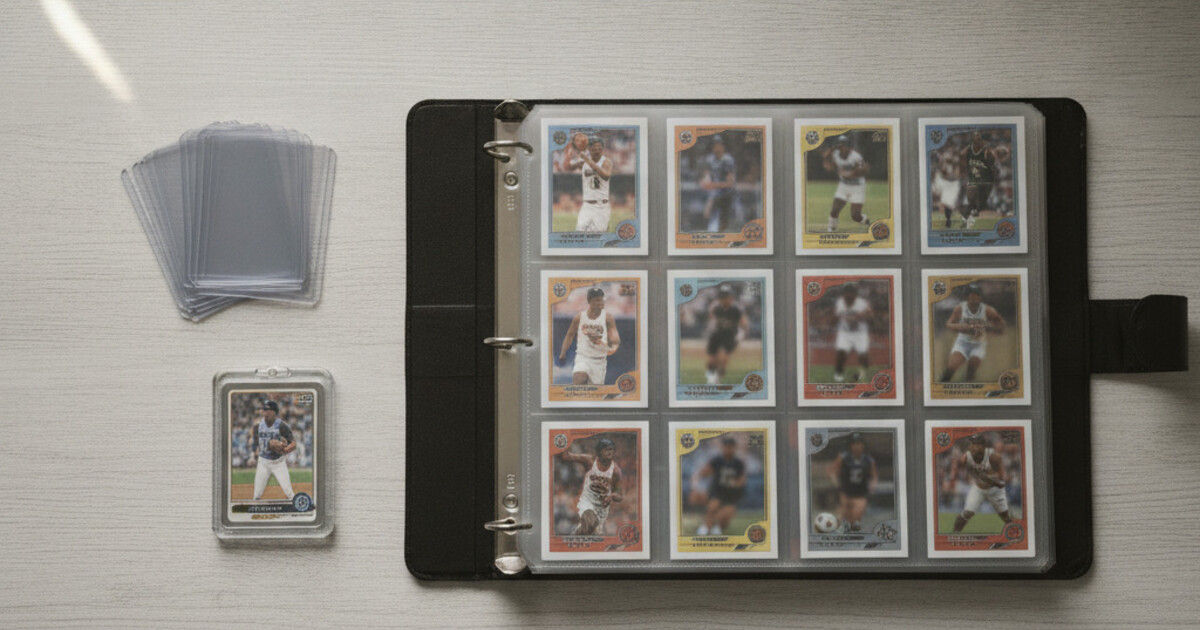
A toploader is a rigid PVC rectangle that fits around a sleeved card. Standard toploaders (35pt) work for most modern base cards and rookie cards. Thicker versions handle relics and patches. They cost around $0.50-$1 each in singles and less in bulk, making them practical for any card worth protecting.
Use a toploader any time a card is worth more than $5-10. The rigid structure prevents bending from bag pressure, rough handling in transit, or anything heavy landing on the stack.
Card Savers (specifically Card Saver I and Card Saver II) are semi-rigid holders that PSA and BGS accept for grading submissions. If you’re sending cards off to be graded, you’ll need Card Savers, not toploaders. Grading services reject hard toploaders because the card can scrape against the PVC edges during removal. It’s a real rejection reason and it delays your whole submission.
Magnetic One-Touch Cases: For Display Pieces
A magnetic one-touch case is a frameless acrylic holder with a magnetic closure. The magnet holds the two halves together without screws or tape. They run $3-8 each for standard cards, more for premium UV-blocking versions.
One-touch cases are for cards you want to display or show off: a Wemby rookie auto, a numbered parallel you pulled from a box, a card that anchors your player collection. The clear acrylic lets you see both sides.
UV-blocking one-touch cases cost about $1-2 more per unit and filter the light exposure that yellows cardboard over years. Worth the upgrade for any card you plan to keep long-term. What makes a card genuinely worth protecting in the first place is worth understanding before you invest in premium cases.
Binders: For Set Builders and Team Collectors
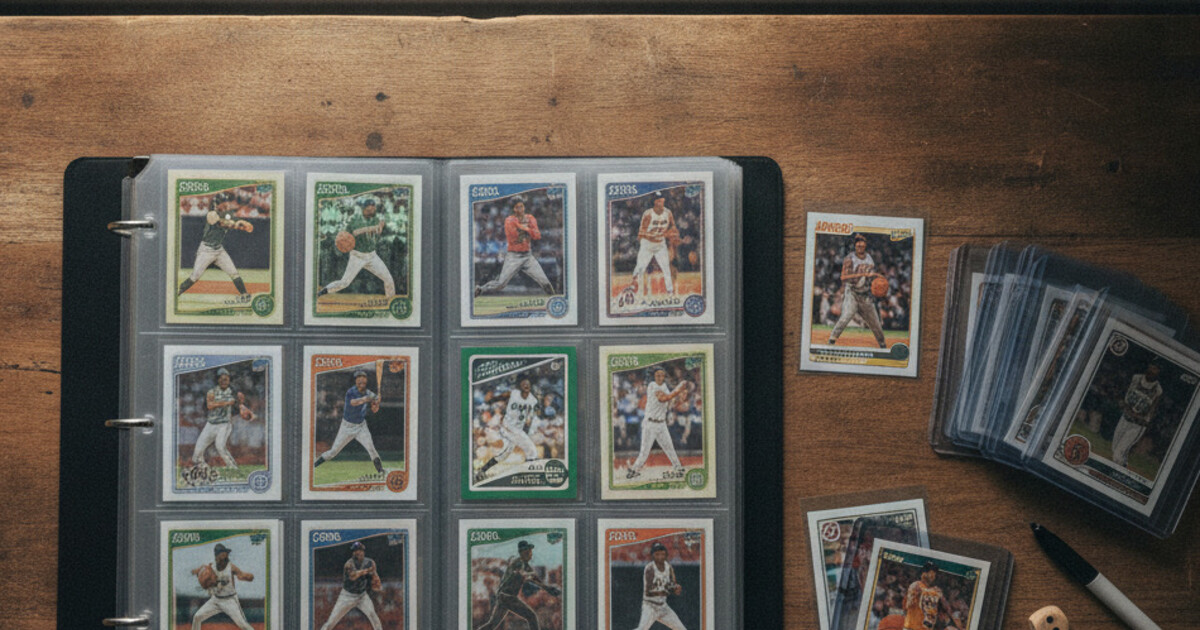
A binder with 9-pocket pages is the setup most set builders and team collectors reach for. They hold 9 cards per page, stack flat, and make a collection easy to flip through and show off.
The critical detail: pages must be side-loading. Top-loading pages let cards slide out when the binder tilts even slightly. Side-loading pages grip the card in place. Ultra Pro Platinum pages and Dragon Shield sideloading pages are both solid options that won’t damage card surfaces.
Don’t double-pocket cards (two cards per slot). It stresses the card edges every time you open and close the page, and the cards scratch each other with every page turn.
Storage Boxes: Bulk Handling Done Right
An 800-count or 5,000-count cardboard monster box is the right container for bulk base cards, commons, and anything not worth individual toploading. They stack cleanly, hold a large quantity, and cost almost nothing per card.
For cards already in toploaders, use a BCW toploader box or a plastic storage box with dividers. Loose toploaders stacked in a standard monster box will shift and tip during any transport, and the cards inside take the impact.
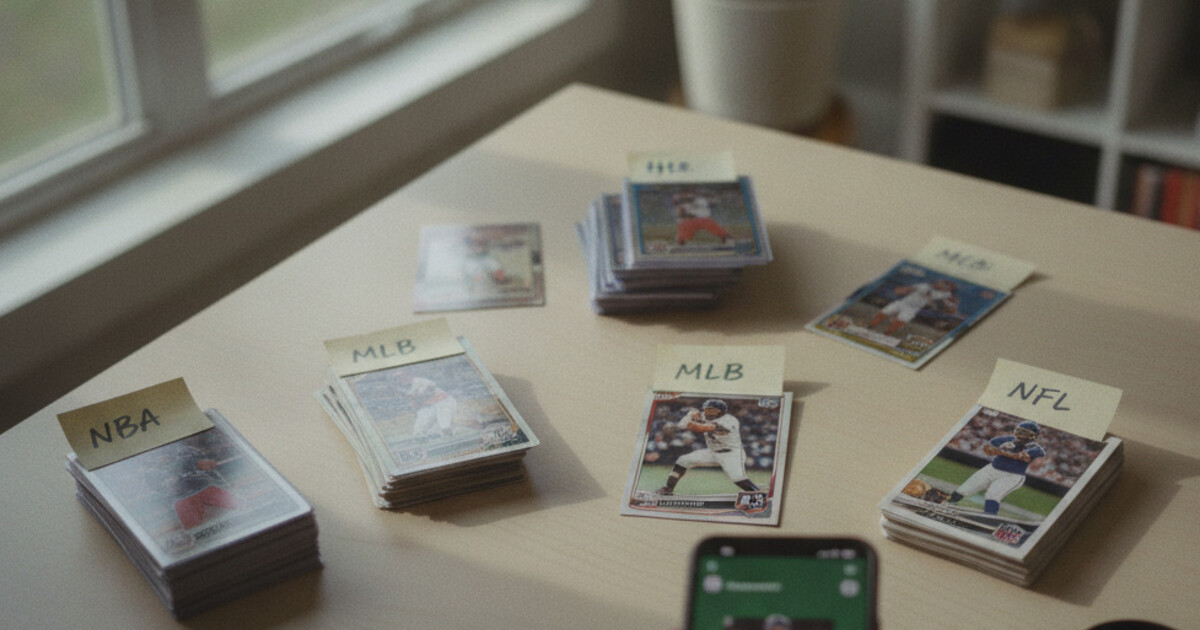
Label your boxes. A box labeled “2024 Topps Chrome, Base Parallels” takes 5 seconds to find later. An unlabeled box takes an afternoon to sort through.
Long-Term Storage: Environment Matters as Much as Supplies
Heat and humidity are the two biggest threats over the long run. High heat warps cards, especially in sealed toploaders where the expansion has nowhere to go. High humidity introduces mold on vintage cards and makes modern cardstock swell and warp. Low humidity dries out older cards that need some moisture to stay flat.
Target storage conditions:
- Temperature: 60-70°F. Attics, garages, and basements cycle too far in both directions seasonally.
- Relative humidity: 40-50%. Silica gel packets in closed boxes absorb excess moisture without drying the air completely.
- Light: Away from windows and fluorescent lights. UV exposure yellows card stock and fades printed colors over time.
A climate-controlled closet inside the main living area is usually close to ideal. If you’re storing a high-value collection long-term, a small dehumidifier in the storage room is worth adding, especially in humid climates.
Handling Rules: Most Damage Happens in the First 30 Seconds
Supplies protect stored cards; habits protect cards in motion. Five rules cover almost everything:
- Touch only the edges. Fingertip oils are acidic enough to degrade cardstock and leave prints baked into chrome and foil surfaces. Pinch the edges, never grip the face.
- Never fan or shuffle cards like a deck. It micro-abrades every surface and dings corners simultaneously — the fastest way to wreck a stack.
- Don’t force a card out of a sleeve. Tap the sleeve and let it slide free. Yanking pulls the card diagonally and creases the top corners.
- Work on a clean, flat surface. Grit and crumbs scratch the card back while you’re focused on the front. A microfiber mat costs a few dollars.
- Don’t stack unsleeved cards. Bare card-on-card contact leaves surface scratches that are invisible now and obvious under a grader’s loupe later.
Why it matters in dollars: condition is the single biggest price lever on a card. The same modern rookie can trade around $40–60 raw, several hundred as a PSA 9, and thousands as a PSA 10. One corner ding removes the top grades — and most of the value — permanently.
Storing Graded Cards (Slabs)
A PSA/BGS/SGC slab protects against bending and fingerprints, but not UV light, humidity, or a drop onto concrete — and a cracked or yellowed holder typically knocks 20–40% off a sale, since buyers price in resubmission ($15–50+) or demand a discount.
- Dedicated slab boxes with dividers (e.g. BCW graded boxes, ~$5, ~20 slabs) are the bulk standard — individual slots stop slabs scratching each other. Never stack loose slabs without dividers; the bottom ones take real pressure.
- Foam-lined cases for slabs worth $500+ — the foam absorbs impact before it reaches the case.
- UV-blocking acrylic for anything on display. Standard acrylic passes almost all UV; a slab near a window yellows and the card inside fades within a few years. UV-filtering stands and frames block ~98%.
- Cleaning: soft microfiber and plain water only. Solvents cloud polycarbonate permanently; rough cloths leave visible scratches.
- For high-value slabs, a fireproof, bolted-down lockbox covers fire, theft, and water damage in one move.
The same environment rules as raw cards apply: 60–70°F, 40–50% relative humidity, out of direct light, and stable temperature — daily hot/cold swings stress slab materials more than a consistently warm room does.
How Stakks Helps You Track What You’ve Stored
Storing cards properly keeps them in good physical shape. Knowing what you have and what it’s worth requires a different system.
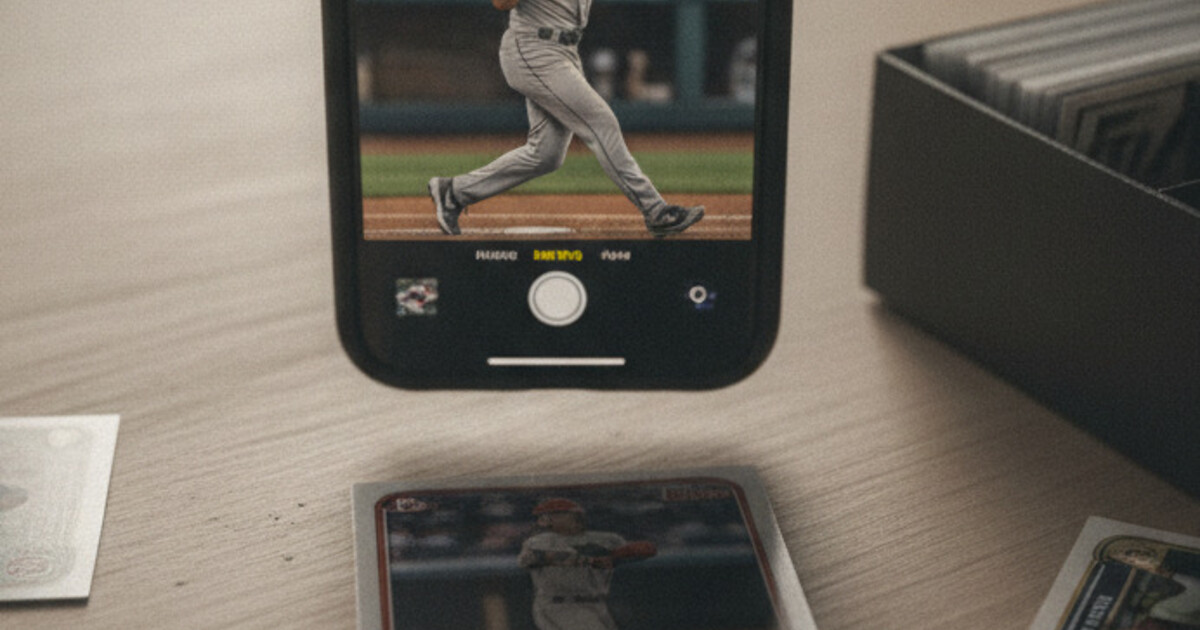
Stakks lets you scan each card and add it to a named collection. The app pulls current estimated market value for each card and shows total collection value across everything in that collection. You can build separate collections for different sports, sets, or players without sorting through physical boxes to know what’s where.
The market price trend indicator shows whether a card has moved up, down, or held steady since you scanned it. That matters when you’re deciding which stored cards to sell and which to hold. If you’re building out your storage system, pairing it with a digital organization method gives you both physical and value tracking in one setup.
Frequently Asked Questions
Do I need a penny sleeve AND a toploader?
Yes. The penny sleeve goes on first and protects the card surface from the hard plastic edges of the toploader. A toploader alone lets the card rattle inside and pick up micro-scratches. Sleeve first, toploader second, every time.
Can I store sports cards in a binder?
Yes, as long as you use side-loading pages. Top-loading pages let cards slide out when the binder tilts. Side-loading pages grip the card in place. Use one card per pocket and don’t double-pocket, which stresses the card edges every time you open and close.
What’s the best way to store high-value cards long-term?
Penny sleeve first, then a magnetic one-touch case with UV blocking. Store in a climate-controlled space at 60-70°F and 40-50% relative humidity, away from direct light. For true high-ticket cards, a graded slab from PSA or BGS offers the most physical protection.
Does heat or humidity damage sports cards?
Both do. Heat warps cardboard, especially in cards sealed in toploaders where the expansion has nowhere to go. High humidity introduces mold on vintage cards and makes modern cardstock swell. Attics, garages, and car trunks are all bad storage environments for this reason.
What’s the difference between a toploader and a Card Saver?
A toploader is rigid PVC. A Card Saver (specifically Card Saver I or II) is semi-rigid and the format PSA and BGS require for grading submissions. If you’re submitting cards to be graded, use Card Savers. For everyday protection and storage, toploaders work fine.
Start with the Right Supplies
Good storage takes a few minutes per card and saves you from finding out what a scratch does to resale value the hard way. Penny sleeve first, toploader for anything valuable, one-touch for display hits, climate-controlled environment for the whole collection.
Once it’s protected and stored, Stakks handles the valuation side. Scan your cards, build your collections, and watch market price trends without digging through boxes every time you want to know what something is worth. Download Stakks free on iOS or Android to get started.