
Want to know what your cards are worth? Stakks is free.
Pulling a card from a pack and setting it down on a dirty table (without a sleeve) is one of the fastest ways to lose money in this hobby. One corner ding on the right card knocks it out of PSA 10 territory permanently. One afternoon on a sunny shelf fades the surface. One humid summer in a basement warps the cardstock past the point of no return. Knowing how to protect sports cards from damage is the difference between a collection that holds its value and one that quietly loses it. This guide covers the full protection stack: handling habits, the right supplies for each card tier, the environmental threats that most collectors underestimate, and the long-term storage practices that actually work.
To protect sports cards from damage, sleeve every card immediately after pulling it, then add a toploader or one-touch holder for anything worth more than a few dollars. Keep storage between 60-70°F and 40-50% relative humidity, away from direct light and heat. Handle cards by the edges only, never the face.
Why Card Condition Determines Value
Card condition is the single variable with the most price leverage. A 2018-19 Panini Prizm Luka Doncic base card in raw near-mint condition trades around $40-60. The same card graded PSA 9 fetches $200-400. A PSA 10 reaches $4,000-6,000 on the current market. That’s roughly a 100x gap between a slightly handled raw copy and a pristine graded one. PSA uses a 10-point scale where condition covers every measurable attribute: corner sharpness, surface wear, centering, edge whitening, print defects, and scratches. A single crease drops most cards at least 2-3 grade points. A fingerprint ground into a chrome surface is an automatic deduction. On a card worth $200 at PSA 9, dropping to PSA 6 means selling for $25-40 instead. The math is unforgiving. Protecting cards isn’t about being precious; it’s about keeping real dollars on the table. Every protection decision you make before putting a card away affects what you can sell it for years later.
The practical rule: protect everything from the moment it comes out of the pack, even cards you think aren’t worth much today. Priorities and player values change fast.
How to Handle Sports Cards Without Causing Damage
Most card damage happens in the first 30 seconds after you pull it.
Touch only the edges. The oils on your fingertips are acidic enough to degrade paper cardstock over time and leave prints baked into chrome and foil surfaces. Pick up cards by pinching the edges, not gripping the face.
Never fan or shuffle cards like a deck of playing cards. This creates micro-abrasions across every surface and dings corners simultaneously. It’s the fastest way to wreck an entire stack.
Don’t force a card out of a sleeve. If it’s stuck, tap the sleeve gently to let the card slide free. Yanking pulls it at a diagonal angle, which creases the top corners immediately.
Work on a clean, flat surface. Tables with grit, crumbs, or dust scratch the back of the card while you’re focused on the front. A microfiber cloth or a purpose-built card mat solves this for about $5-10.
Don’t stack unsleeved cards. Even brief contact between bare card faces causes surface scratches that are invisible now and obvious under a grader’s loupe later.
The Environmental Threats That Quietly Ruin Collections
Long-term storage is where most collections lose value without the collector noticing until they go to sell.
Heat warps cardstock and can soften the adhesive on sticker autos. Anything above 80°F consistently starts to curl cards. Car trunks, attics in summer, and spots near heat vents are all slow-motion card killers. A card left in a parked car on a summer afternoon can warp enough to miss centering specs for grading.
Humidity is the biggest long-term threat. At 60% relative humidity or above, cardstock absorbs moisture and warps. Paper cards can develop mold within months at sustained high humidity levels. The safe range is 40-50% RH. A basic digital hygrometer costs $12-15 at any hardware store and tells you exactly where your storage area sits.
UV light bleaches color from cards over time. Standard fluorescent bulbs contribute, but direct sunlight is the main offender. Vintage cards left near windows lose print vibrancy within years. Closed card boxes and drawers block this entirely; UV-filtering display cases help if you want cards on display.
Dust and debris act like sandpaper during handling. Even fine household dust particles scratch chrome surfaces when you’re sliding a card in or out of a holder. Sealed card boxes prevent accumulation between handling sessions.
For the full breakdown of storage supplies and how to build a proper storage setup, our guide on how to store sports cards covers every layer of the system.
Protection Supplies, Matched to Card Value
You don’t need a screwdown holder for a base Topps Series 1. Matching the supply to the card’s actual value keeps costs manageable while protecting what matters.
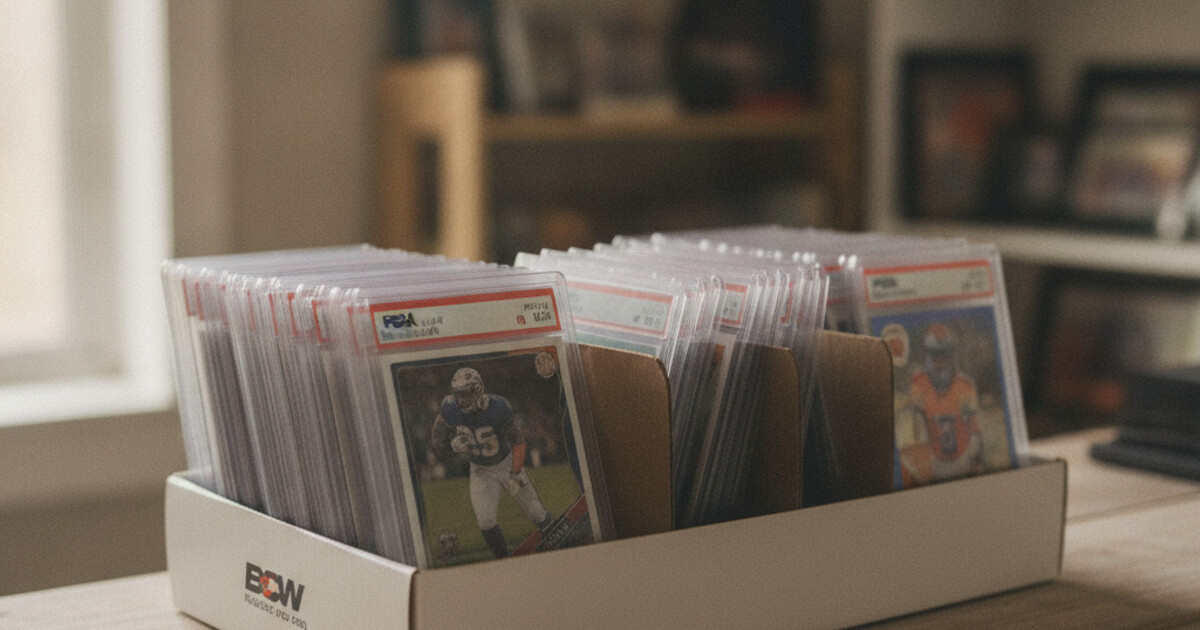
Penny sleeves ($0.02 each): the baseline. Soft polypropylene sleeves protect card surfaces from direct contact with other cards, oils, and dust. Sleeve every card that comes out of a pack, every card going into a binder, every card sitting in a box. There’s no excuse not to; the cost is negligible.
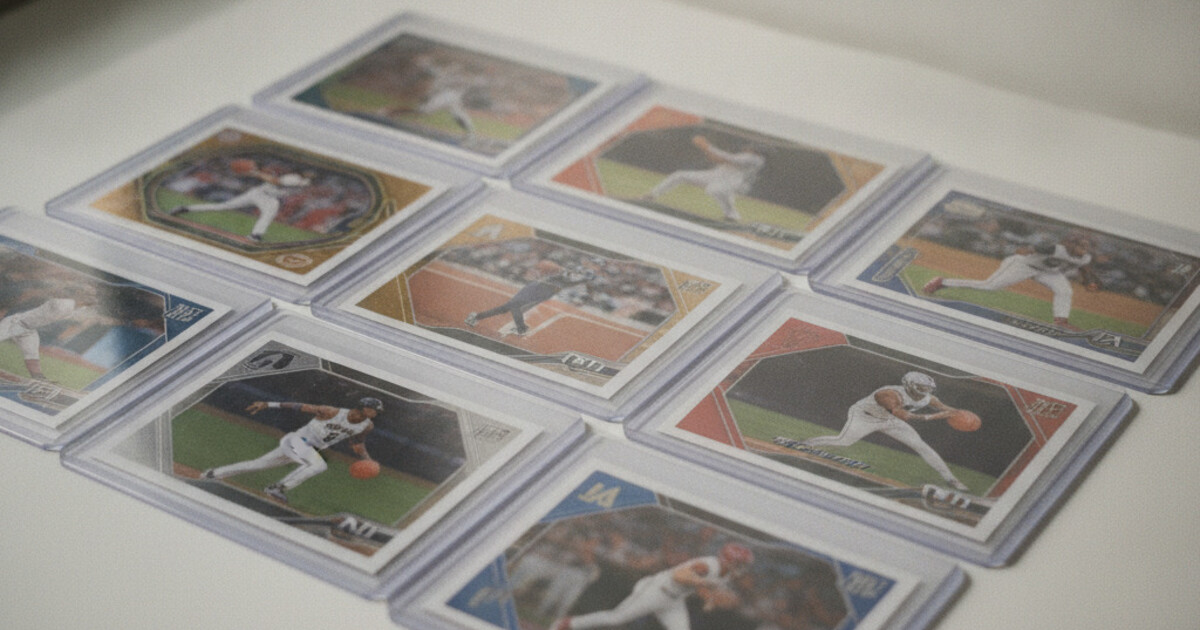
Toploaders ($0.20-0.35 each): for cards worth $5-$200. Rigid PVC holders slip over a sleeved card and prevent bending. Standard 35pt toploaders fit most modern base cards. Thicker cards (jersey relics, autos, dual-layer cards) need 75pt or 100pt holders. Toploaders protect against bending from weight and accidental drops.
Card Savers ($0.25-0.40 each): for grading submissions. If you’re planning to send cards to PSA or BGS, Card Saver I or II holders are required instead of regular toploaders. The semi-rigid design lets graders slide the card out without touching it. Regular toploaders can scratch card edges during extraction, which costs you points before the grader even looks at the surface.
Magnetic one-touch holders ($1-3 each): for cards worth $200+. Screwless magnetic holders provide rigid four-sided protection and are safe for long-term display and storage. They’re worth the cost on any card where a single grade point means a significant dollar difference.
Screwdown holders ($3-8 each): for high-value singles. The most secure physical option. Screwdowns clamp the card from all four sides with no pressure on the face itself. Use these for any card worth $500+ where you want maximum protection without risking the holder popping open.
Team bags. Larger soft sleeves that fit over a toploader or one-touch. Useful for transport and for adding one more layer of protection against dust and scratches when moving cards around.
How to Protect Sports Cards from Damage in Long-Term Storage
Good supplies alone aren’t enough. The system around them matters.
Layer protection. Sleeve first, then toploader or holder. Never store cards naked inside a box, even if you plan to move them again tomorrow.
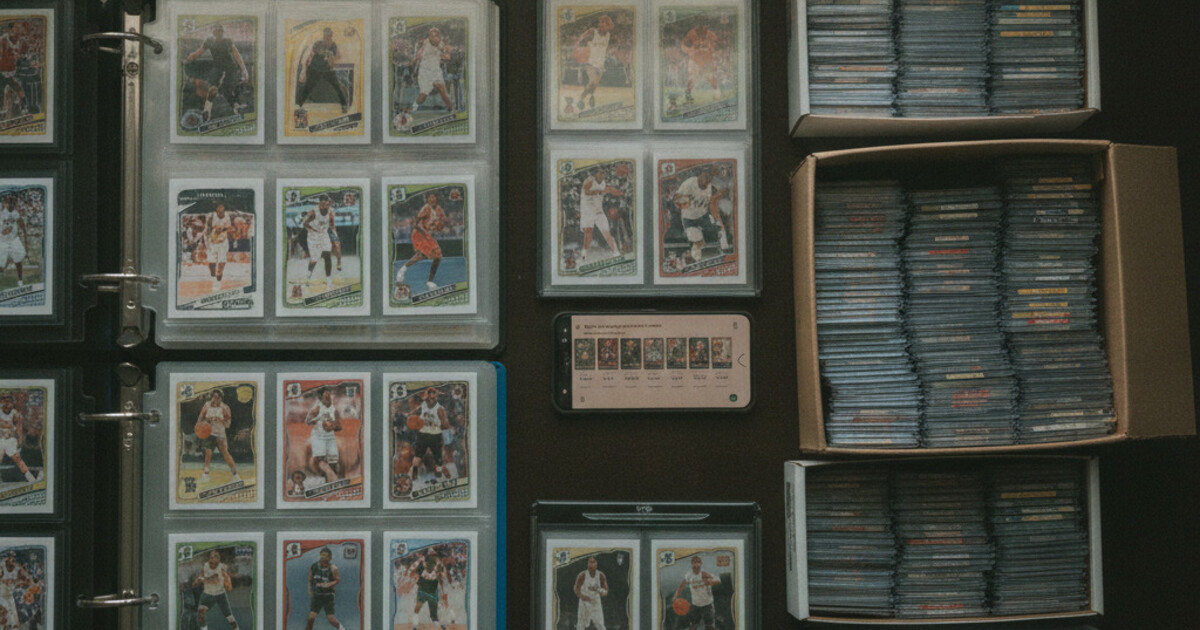
Store boxes horizontally or with cards standing upright in proper card storage boxes. Cards stored at a lean develop stress bends over time from gravity and the pressure of surrounding cards. An 800-count card box holds cards standing perfectly vertical; that’s what it’s designed for.
Keep boxes off the floor. Basements flood. Minor water infiltration destroys entire collections. Elevated shelving in a climate-controlled room is the standard setup for serious collectors.
Skip rubber bands entirely. They leave permanent grooves in card edges and become brittle over time, snapping directly onto card surfaces. Use cardboard or plastic card dividers to hold groups together.
Binder pages need to be side-loading. Top-loading binder pages let cards slide out when the binder tilts, causing corner dings and surface contact. Side-loading pages hold cards securely regardless of angle.
Check storage conditions twice a year. Look at the hygrometer reading, check the top cards in each stack for early warping, and resleeve anything showing wear. Catching a humidity spike early saves cards; catching it after six months of damage doesn’t.
For tracking which cards in your collection are worth the most protection investment, our article on how to track sports card portfolio value walks through the valuation side.
How Stakks Helps You Identify What Needs Protection
Protecting cards is easier when you know what they’re worth. Stakks lets you scan each card with your phone camera and pulls current estimated market value from live sales data. The app shows a low price, high price, and price trend for each card, so you can quickly sort your collection by value and figure out which cards need one-touch holders and which are fine in basic toploaders.
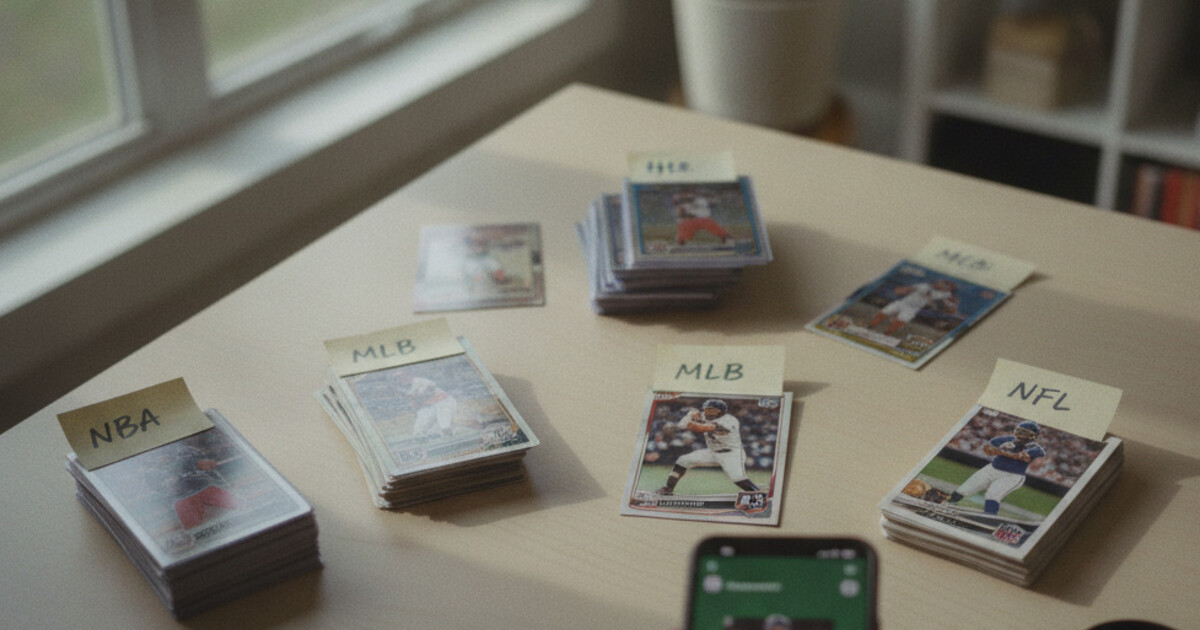
Create named collections inside the app to organize cards by protection tier: high-value cards that need premium holders, mid-range cards in toploaders, base cards in penny-sleeved boxes. The total collection value updates automatically as market data shifts, so you’ll spot when a card’s value rises enough to justify upgrading its holder.
Scan your full collection in Stakks first. Once you know what you have and what it’s worth, the protection decisions become obvious.
Frequently Asked Questions
What’s the best way to protect sports cards from bending?
Toploaders are the most reliable anti-bend option for everyday storage. They’re rigid enough to resist most accidental pressure and drops. For cards going to graders, use Card Saver I or II instead. Penny sleeves alone don’t prevent bending under weight or impact. For anything worth $200 or more, a magnetic one-touch holder provides full four-sided rigid protection.
Does humidity really damage sports cards?
Yes, and it’s one of the most destructive long-term threats because the damage accumulates slowly. At relative humidity above 55-60%, cardstock absorbs moisture and begins to warp. Sustained high humidity can cause mold growth on paper cards within months. Keep storage areas between 40-50% RH. A digital hygrometer (under $15) lets you monitor the level without guessing.
Can scratched sports cards be repaired?
Surface scratches on sports cards can’t be repaired without permanently altering the card, which constitutes tampering under grading-service rules. PSA, BGS, and SGC all detect restoration. A scratched card grades lower than a clean one, and the only real fix is prevention from the start. Handle chrome cards especially carefully during the first few seconds after opening.
Should I sleeve cards even if I’m not planning to grade them?
Yes. Penny sleeves prevent surface scratches, fingerprints, and debris contact during normal handling and storage. They cost almost nothing and protect against the kind of incremental damage that adds up invisibly over years. A $0.02 sleeve on a card you think is worthless today keeps options open if that player’s career changes the card’s value.
How do I protect sports cards during transport or at a card show?
Use a sleeved card inside a toploader, then add a team bag over the toploader for an extra soft layer. Card shows involve a lot of card-on-card contact risk during browsing. For bulk transport, a binder with side-loading pages works well. For individual high-value singles, a one-touch holder inside a padded card carrying case is the safest setup.
Condition is the foundation of value. Understanding the gap between a raw card and a graded one helps explain why protection matters so much from day one. Our breakdown of graded vs raw cards covers that in detail.
Scan your collection in Stakks to see current market estimates for every card. Once you know what you’re protecting, it’s a lot easier to protect it right.