
Want to know what your cards are worth? Stakks is free.
You cracked open a pack, sorted past the base cards, and found one that looks completely different from the others. Different design, special foil, sometimes a patch of jersey fabric or a signature on the front. That’s an insert. If you’ve ever wondered what separates an insert from a regular card, or why some sell for a few dollars while others sell for thousands, this guide breaks it down.
An insert card is a bonus card found in sports card packs that has its own unique design, separate from the base set. Inserts don’t appear in the base card checklist and are seeded at lower rates, making them rarer than base cards. Some inserts also include autographs, memorabilia pieces, or serial numbers that push their value significantly higher.
What Makes a Card an Insert Card
Every sports card set starts with a base set: the standard player lineup with a consistent design. Insert cards sit outside that base set. They use a different design, different foil treatments, and sometimes different card stock. Manufacturers print them in smaller quantities and seed them at lower pull rates, so you won’t find one in every pack.
The term “insert” covers a wide range. At one end, you have simple short-printed sets with a slightly different design, seeded maybe once per pack. At the other end, you have autograph and relic cards that can sell for hundreds or thousands of dollars. What connects all of them is the same mechanic: they’re bonus cards outside the base checklist, appearing less frequently.
Insert cards became a formal part of the hobby in the early 1990s, when manufacturers started seeding bonus subsets into packs to drive collector excitement beyond base sets. Upper Deck’s decision to include authenticated autograph cards in 1989 Baseball proved that premium inserts could command real secondary market demand, and every major manufacturer followed. By the mid-1990s, inserts had become central to how card products were designed and sold. Modern sets typically include 8 to 15 distinct insert sets alongside the base set, each with its own checklist and pull rate. Those pull rates, printed on box wrappers and published by manufacturers, determine scarcity. A card seeded at “1:24 packs” appears roughly once per case; a card at “1:288 packs” is genuinely rare. Understanding pull rates lets collectors evaluate a card’s supply before checking its price. Condition, player status, and set prestige layer on top, but scarcity is where insert card values start.
The Main Types of Insert Cards in Sports Cards
Inserts come in several formats, and the type is the biggest driver of value.
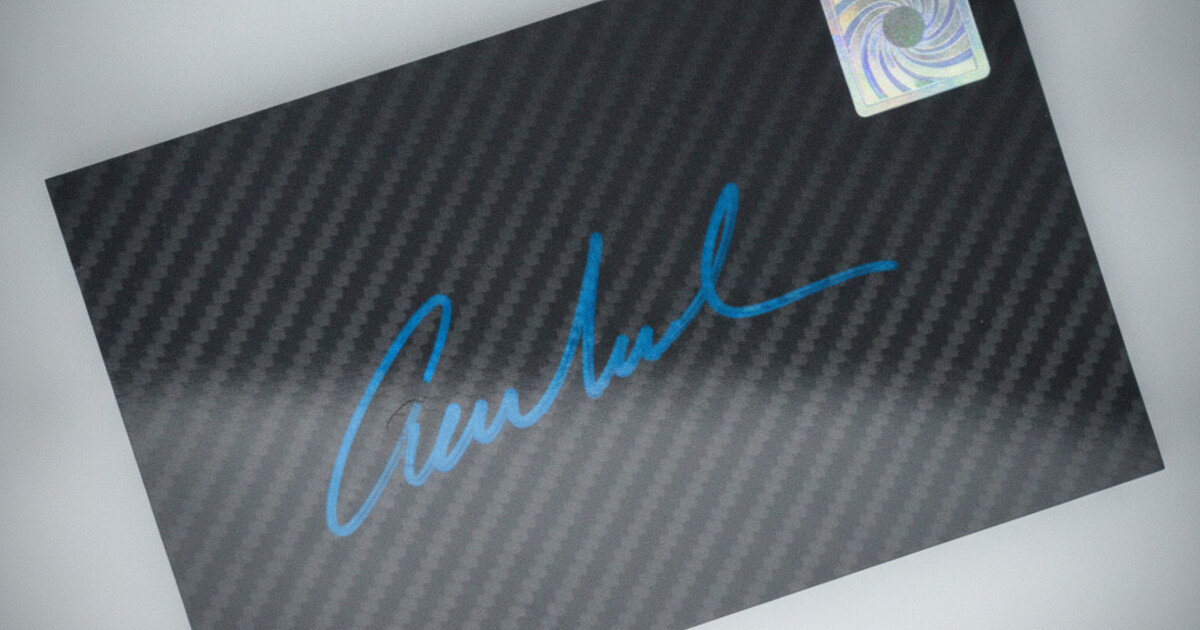
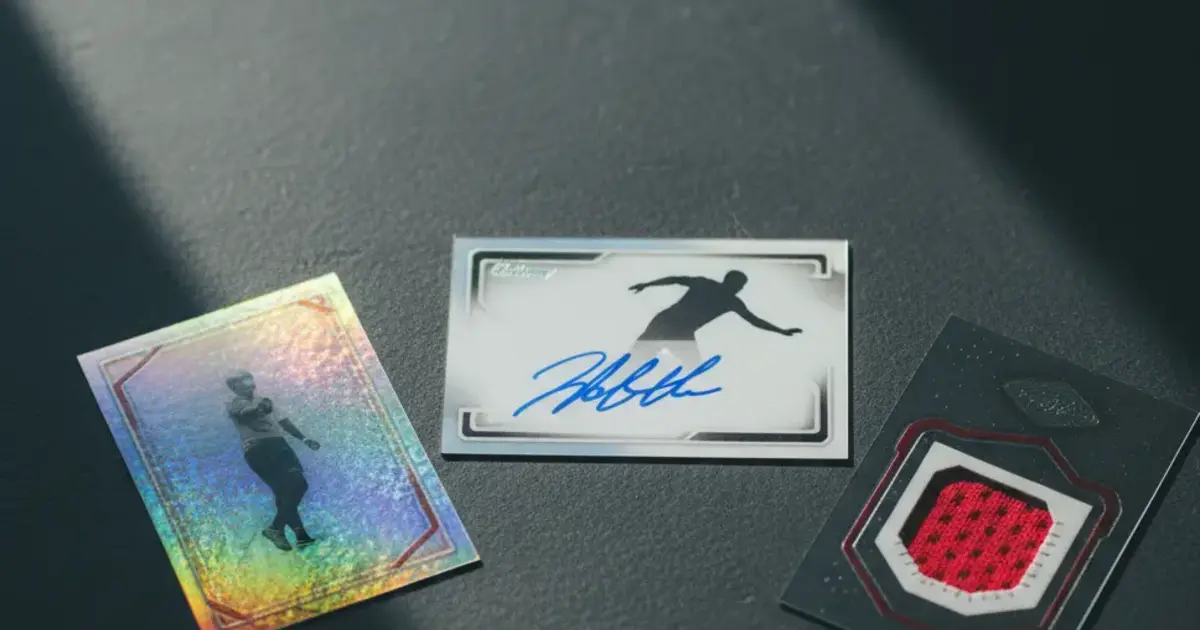
Autograph inserts are cards signed by the player, either directly on the card surface (on-card autos) or on a sticker applied during production. On-card autographs carry more collector demand because the player physically handled each card and signed it. Sticker autos are more common and less sought after, but they still command premiums over non-auto inserts. The price gap shows up clearly: an on-card rookie auto from Bowman Chrome can sell for 30-50% more than a sticker auto version of the same player from a comparable product.
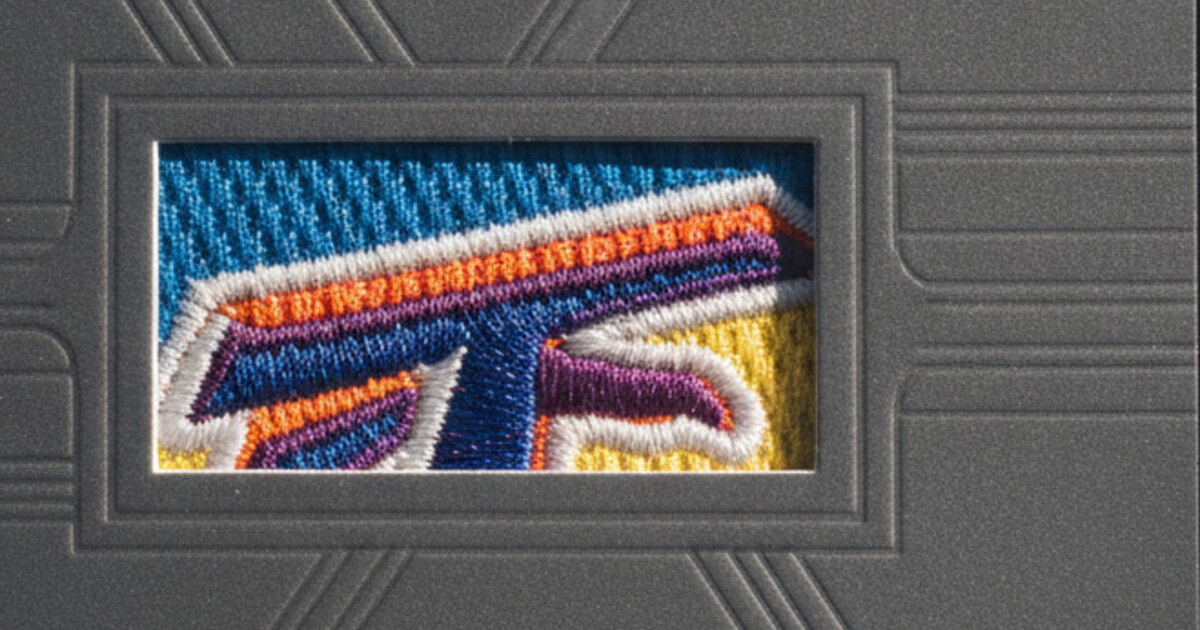
Relic cards contain a piece of memorabilia embedded in the card: a jersey swatch, a patch piece, a bat sliver, or sometimes a piece of the playing field. A jersey relic shows a patch of fabric through a window cut into the card face. Patch cards are the premium version, featuring a colorful or logo-containing piece of the jersey rather than a plain white or gray swatch. Cards that combine an autograph and a memorabilia piece are called “auto-relics” and typically carry the highest values in any given set.
Insert sets (sometimes called “themed inserts”) have their own distinct design but no autograph or relic. Products like Topps Chrome Logofractors, Panini Prizm Emergent, or Bowman Inception subsets carry their own checklists and pull rates. These are seeded less frequently than base cards and often have their own serial numbering that limits supply further.
Die-cut and specialty inserts use shapes beyond the standard card rectangle. Some have unusual cutouts, 3D surfaces, or fold-out designs. They appeared heavily in 1990s products and still show up in select premium sets. Their value depends far more on the player than the format.
Insert parallels add another layer: many insert sets have their own numbered tiers, just like base card sets do. An autograph card might have a base version and a serialized /25 variant. The /25 is both an insert (a different design, outside the base set) and a parallel of that insert. For a full breakdown of how the parallel tier system works, see the guide on what is a parallel card.
What Are Insert Cards Worth?
The short answer: it depends on the type, the player, the print run, and the market.
Autograph and relic inserts are where the significant money lives. A rookie auto of a top prospect can sell for hundreds before that player appears in a professional game. An established star’s on-card auto from a premium set can reach thousands. The variables are player status, set prestige, print run, and condition.
Insert-set cards without autos or relics sit across a wider range. A common insert of a mid-tier player from a widely distributed retail set might sell for $1-4. A short-printed insert of a breakout star from a premium brand can reach $50-200. The set and pull rate matter nearly as much as the player.
Condition affects every price tier. Corners, surface scratches, and centering all cut into value. Professionally graded inserts (PSA, BGS, SGC) carry premiums over raw copies when the grade is strong, particularly for cards that already command significant prices.
For a practical breakdown of all the factors that push any card’s price up or down, see how to tell if a sports card is valuable.
Inserts vs. Parallels vs. Base Cards
These three categories trip up new collectors regularly. Here’s how they’re actually different.
Base cards are the standard player cards from a set’s main checklist, printed in large quantities. They follow a consistent design across the set and are the most common cards in any product.
Parallel cards are alternate versions of base cards. Same player, same photo, different border color or foil finish. They’re printed in smaller quantities than the base version but replicate the same card design.
Insert cards use a completely different design. They have their own checklist and don’t replicate any base card. When you pull an insert, you’re getting a card type that doesn’t exist anywhere in the base set.
The practical difference: a numbered insert and a numbered parallel can both be scarce, but they come from completely different places in the product structure. A parallel of a base card means you have a rarer version of a card that thousands of copies exist for. An insert means you have a card design that base set collectors don’t have at all.
How Stakks Identifies Insert Cards
When you scan a card with Stakks, the app returns the card’s full details: player name, sport, team, year, set, brand, card number, rarity, and insert name. That insert name field is where insert cards surface in the identification. Scan a card from Topps Finest, a Panini auto-relic, or a Bowman Chrome insert subset, and Stakks shows exactly what it is along with the estimated market value pulled from recent sales data.
Inserts can be hard to place without reference materials, especially older ones where the original box wrapper isn’t available to check pull rates. Scanning cuts through the guesswork. The app shows the specific card type and a price range based on what comparable copies have sold for recently.
If you’re sorting through a shoebox or an inherited collection, scan anything that doesn’t look like a standard base card. Inserts don’t always announce themselves with bright foil; some are subtle enough to get lost in a pile of commons. Stakks catches the ones that would otherwise slip past you, so nothing gets undervalued.
Frequently Asked Questions
What is an insert card vs. a base card?
A base card is a standard player card from the main set, printed in large quantities. An insert card is a bonus card with its own unique design, seeded at a lower rate inside packs, and not part of the base checklist. Inserts are rarer by design. Some include autographs or memorabilia pieces that make them significantly more valuable.
Are all insert cards rare?
Not equally. Simple insert sets without serial numbers can be seeded at one per pack, making them relatively common. Autograph and relic cards are typically seeded at one per box or one per case. Serial-numbered inserts printed to /25 or fewer are among the rarest cards in any set. Check the pack odds to know where a specific insert falls on the rarity spectrum.
What makes an autograph insert more valuable than a regular insert?
The player signed the card personally. On-card autos, where the player signed the card surface directly, carry more collector demand than sticker autos. On-card signatures require the player to handle each card individually, while sticker autos are applied during production. That physical connection to the player is what collectors pay the premium for.
Can a card be both an insert and a parallel?
Yes. Many insert sets have their own parallel tiers. An autograph insert might come in a base version and a serialized /10 variant. The /10 is both an insert (a different design, outside the base set) and a parallel of that insert. Reading the card details carefully, or scanning it, is the fastest way to understand what you’re holding.
Does Stakks identify insert cards?
Yes. When you scan a card with Stakks, the app shows the insert name field in the card details alongside the player, year, set, brand, and rarity. The market value shown reflects recent sales for that specific insert version, so you get an estimated price for exactly what you have.
Know What You Pulled
Inserts cover a lot of ground, from cheap themed sets to five-figure autographs. Knowing which category you’re holding is step one before you can evaluate value.
Scan it with Stakks. The app identifies the insert type and rarity, then pulls estimated market value from recent sales data so you know what you’ve got without digging through completed eBay listings on your own.