
Want to know what your cards are worth? Stakks is free.
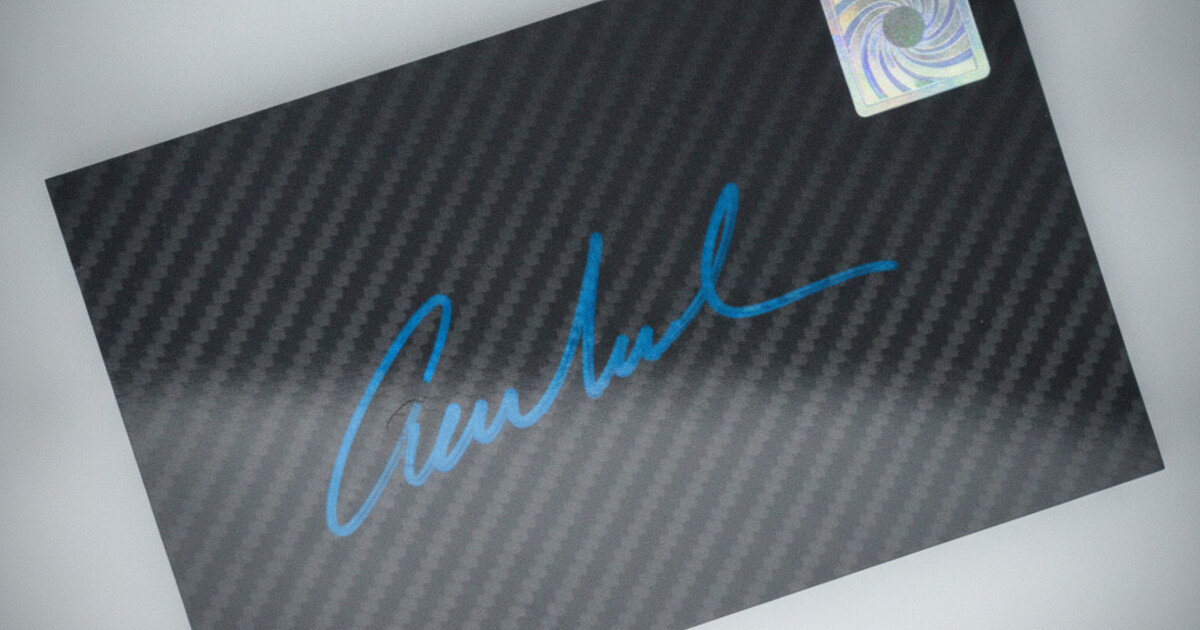
You know that moment when you flip to the back of a pack and a card slips out that feels different. The front carries ink, a real signature in pen, and there’s a foil authentication mark on the reverse. That’s an autograph card.
Auto cards have anchored the sports card hobby since 1990. They’re a big reason collectors spend $20 on a single pack instead of a dollar. A certified auto from a minor prospect might sell for $8. A rookie autograph card from the right player can crack five figures. Same basic product, wildly different prices, and the gap usually comes down to four variables.
Here’s what makes an autograph card what it is, how the certified process works, and what actually drives the value.
An autograph card is a certified trading card that includes a player’s genuine signature, authenticated by the manufacturer during controlled signing sessions. Autos are either signed directly on the card stock (on-card) or on adhesive labels applied later (sticker). They’re rarer than base cards, usually numbered, and can range from a few dollars to hundreds of thousands based on the player, print run, and format.
What Is an Autograph Card in Sports Cards?
The concept goes back to 1990. Upper Deck convinced baseball prospects to sit for signing sessions and embedded their signatures in packs for the first time. Before that, autographs were something you chased at the stadium or sent a card through the mail to get. Upper Deck changed the model: the manufacturer controlled the sessions, authenticated every signature, and sealed the results into production runs. You pulled a certified auto and you knew it was real.
Today, every major manufacturer runs certified autograph programs. Topps, Panini, Bowman, and Upper Deck (for hockey) sign players before or during the season. Cards go directly into production after authentication seals or holograms are applied. The whole chain is manufacturer-controlled, which is why certified autos carry more value than a privately obtained signature from the same player.
Certified autograph cards entered the hobby in 1990 when Upper Deck introduced player-signed inserts in their inaugural baseball set. In the 35 years since, the auto card market has become one of the hobby’s biggest value segments. At the low end, a certified auto from a minor-league prospect or a journeyman player typically sells for $3 to $25 on the secondary market. Mid-tier autos from established starters in popular sets land between $50 and $500, depending on the player’s performance that season and the card’s print run. Premium rookie autos from elite picks command far more: Victor Wembanyama’s 2023-24 Panini Prizm RC autos sold for $3,000 to $20,000 depending on the parallel and condition. The all-time record belongs to a 2003-04 Upper Deck Exquisite LeBron James Rookie Auto numbered /99, which sold at auction for $1.8 million in 2021. Three factors drive nearly all auto value: the player’s career trajectory, the card’s print run, and whether the signature is on-card or applied as a sticker.
On-Card vs Sticker Autos: Why Collectors Pay More
Autos come in 2 signing formats, and they trade at noticeably different prices.
On-card autos are signed directly on the card stock. The player holds the physical card, puts pen to surface, and the ink presses into the material. These are harder to produce because the signing window is built around the actual card stock. On-card autos are the preferred format in the hobby, and premium products (National Treasures, Topps Inception, Bowman Sterling) almost always use them.
Sticker autos are signed on adhesive labels that manufacturers apply to the finished card later. Panini leaned heavily on sticker autos for years, which drew consistent criticism. Sticker placement can look off-center, and the labels can curl or crack over time, especially if the card isn’t stored flat and away from humidity.
The price gap is real. For the same player and the same print run, on-card autos sell for 20-40% more than sticker versions in active secondary-market comparisons. If you’re buying for value retention, the on-card format matters. If you’re speculating on a prospect and price is tight, a sticker auto from a base-level set is still a certified auto.
One more practical point: on-card autos are harder to fake convincingly. A sticker can be printed and applied. The ink-into-stock pressure of a genuine on-card auto is much harder to replicate and easier to verify under magnification.
How Much Are Autograph Cards Worth?
Auto cards cover more price ground than almost any other card type in the hobby. These 5 factors drive nearly all of it:
Player. A Patrick Mahomes RC auto sells for more than a backup lineman’s. Star power is the biggest single driver. Retired Hall of Famers with small print runs stay valuable for decades because their cards aren’t being produced anymore, while new collectors entering the hobby keep demand alive.
Rookie year. A rookie autograph produced during the player’s first officially licensed season carries a permanent premium over later autos of the same player. The supply is capped at the original print run and never increases. Demand can climb for 10 or 15 years if the player’s career takes off.
Print run. A serial numbered /10 auto sells for more than the same card numbered /99. A 1/1 printing plate auto often sells for multiples of the /10 price. Our guide on what makes a sports card rare covers print run tiers and how they move secondary market prices.
On-card vs sticker. Covered above. On-card commands a 20-40% premium over sticker for the same player and print run.
Condition. Surface scratches, corner wear, and signature smearing all cut into value. For high-value autos, many collectors send them to PSA or BGS for professional grading. A PSA 10 auto routinely sells for 2-4x the price of an ungraded copy of the same card. Our graded vs raw cards guide walks through the grading cost math and when it makes financial sense.
Rough price ranges by tier:
- Prospect or common player auto: $3-$25
- Current starter, mid-tier set: $50-$300
- Star player, numbered, popular set: $300-$2,000
- Top rookie of the year, premium product: $2,000-$20,000+
- All-time great, low print run, premium set: $10,000 and up
If you want to know where your specific auto lands right now, scan it with Stakks. The app identifies the player, set, year, and print run, then shows current market value from recent sales data with a low-to-high price range.
Types of Auto Cards Collectors Chase
Not all autograph cards are the same product. These are the ones that matter most:
Rookie Auto (RC Auto). Signed during the player’s official licensed rookie season. Supply is permanently capped at the original print run. If the player becomes great, demand grows for years while supply stays exactly where it started. These hold the most long-term value potential of any auto type.
Auto/Relic Combo. A single card with both a signature and embedded game-used material: jerseys, bat wood, or patches combined with the auto on the same card face. These carry premiums over straight autos from the same set and print run. Our relic and patch card guide covers how the material tiers break down from jersey swatches to logomans.
Redemption Auto. A placeholder card you exchange for the actual signed card later, once the player finishes their signing session. Panini and Topps issue redemptions when production timelines can’t wait. Redemptions trade at a discount compared to the physical card until the exchange arrives.
Prospect Auto (non-RC). Signed before the player reaches the major leagues or top-tier roster. Bowman Chrome is the home of prospect autos. Cheap if the player doesn’t develop. Potentially valuable if he becomes a star. These are speculative buys by nature.
Printing Plate Auto. A 1/1 card made from the actual printing plate used to produce the set, numbered 1/1 by definition and always unique. Even mid-tier players carry premiums on printing plates because of the one-of-one status.
How to Tell If an Autograph Card Is Certified
Certified autos come with manufacturer authentication built in. Look for these markers:
- A holographic foil seal or COA stamp (Topps COA, Panini hologram, Upper Deck hologram) on the card face or reverse
- An ink signature that shows slight compression into the card surface on on-card versions
- A serial number that matches the manufacturer’s official database listing for that set and player
The most common mistake new collectors make is confusing manufacturer-certified autos with privately obtained signatures. A card signed at a fan event, through the mail, or at a card show is “authentic” if you trust the source, but it’s a different product from a manufacturer-certified auto. Private autographs don’t carry COA stamps and trade at different price points on the secondary market.
Counterfeit certified autos do exist, mostly targeting high-value cards. If you’re buying an expensive auto from an unknown seller, ask for photos of the COA stamp under magnification. For more physical authentication checks, including how to spot printed fakes that mimic signatures, see our guide on how to spot a fake or reprint sports card.
Frequently Asked Questions
What does “auto” mean on a sports card?
“Auto” is shorthand for autograph. On a sports card, it means the player’s certified signature is on the card, authenticated by the manufacturer. Auto cards are rarer than base cards and typically more valuable than unsigned versions of the same card.
Are autograph cards always numbered?
Most certified autos carry a print run number (/99, /25, /10, etc.), but not all. Some base-level auto sets include unnumbered certified autos. Numbered autos are generally more valuable because the print run is documented on the card itself, confirming scarcity.
What is a rookie auto and why is it so valuable?
A rookie auto is a certified autograph produced during a player’s first officially licensed season. The supply is permanently fixed at the original print run. If the player becomes a star, demand grows while supply stays exactly where it started. That gap is what drives high prices.
What is a redemption auto?
A redemption auto is a placeholder card you mail in (or redeem digitally) to receive the actual signed card later. Manufacturers issue these when a player’s signing session runs past production deadlines. Redemptions trade at a discount compared to the physical version because you’re waiting on delivery.
Is a sticker auto worth less than an on-card auto?
Generally, yes. On-card autos, where the player signed directly on the card stock, are preferred by collectors and command 20-40% premiums over sticker versions from the same set and print run. Sticker autos can also peel or crack over time, which adds a long-term condition risk.
Autograph cards cover a huge range: from a $5 prospect speculation to a seven-figure auction record. The basics travel with you anywhere. Who signed it, when they signed it, how many copies exist, and whether the signature is on the card or on a sticker. Know those four things and you can size up almost any auto you pull or find in a collection.
If you want to know what a specific auto is worth right now, download Stakks and scan it. Point your camera at the card and you’ll get the player ID, set details, print run, and current market value from recent sales in about 10 seconds. Free to download at stakks.app.